
Last updated September 20, 2026
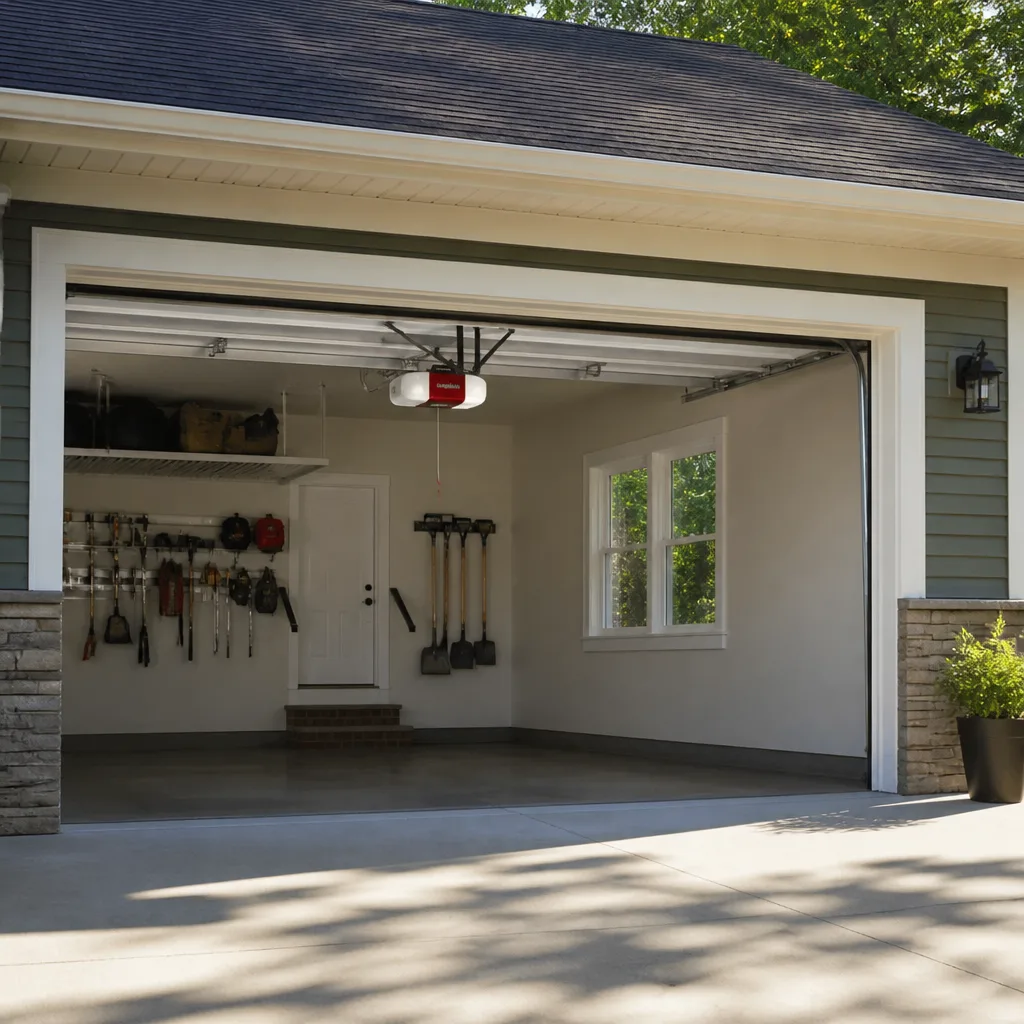
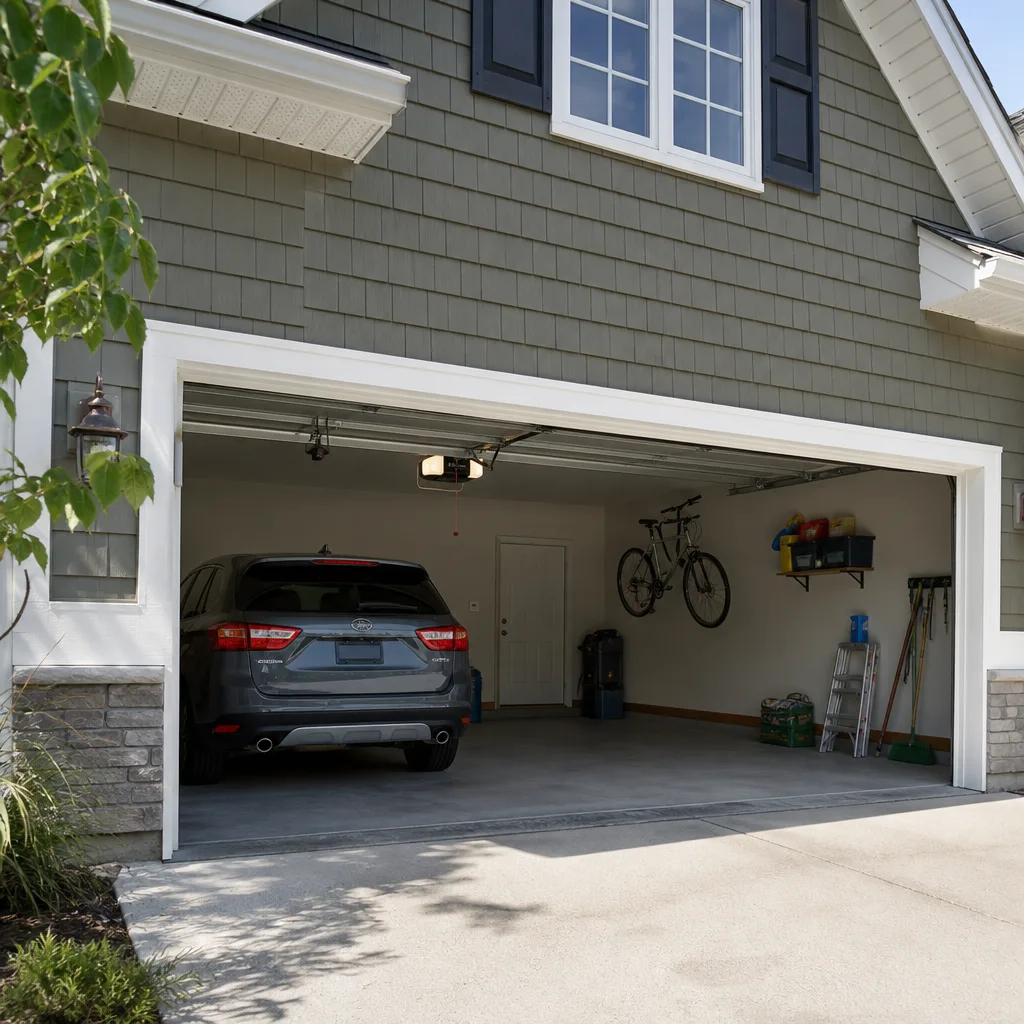
 Before
 After
After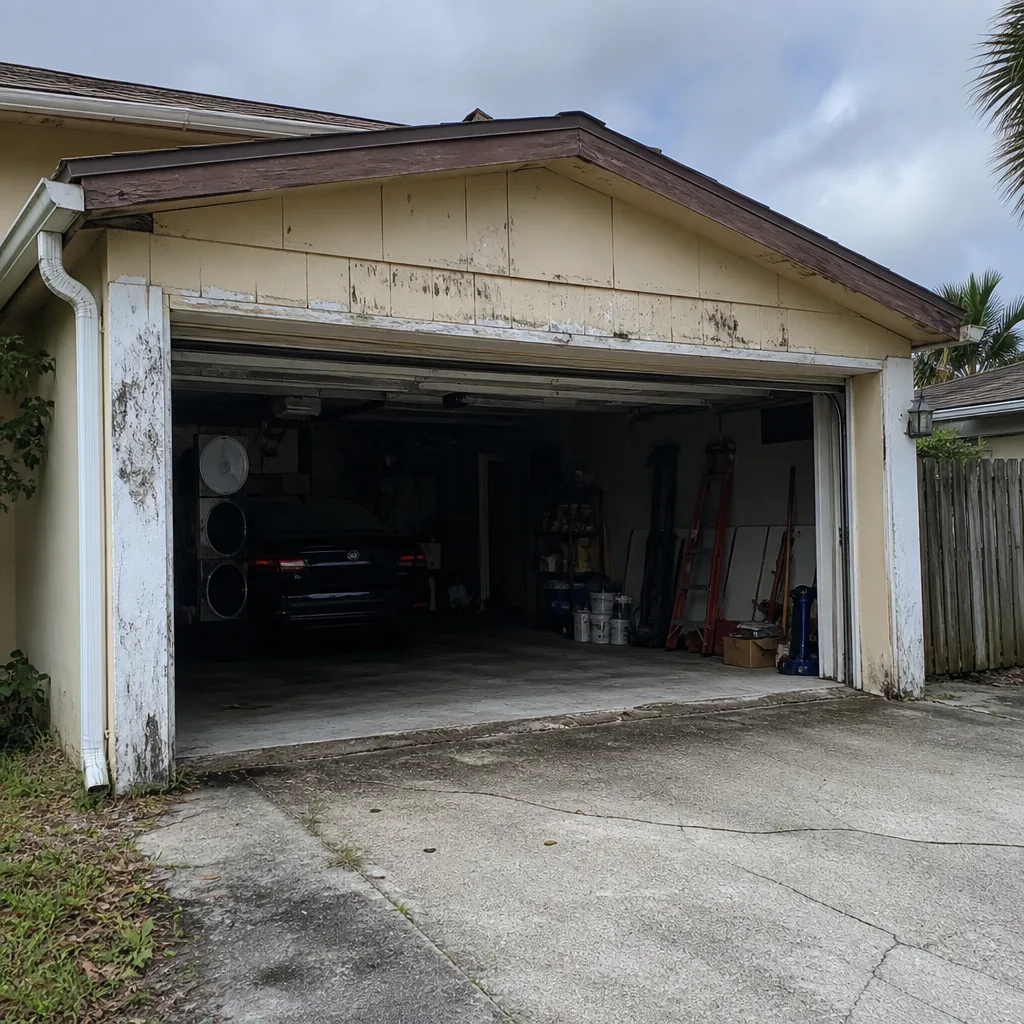 Before
 After
After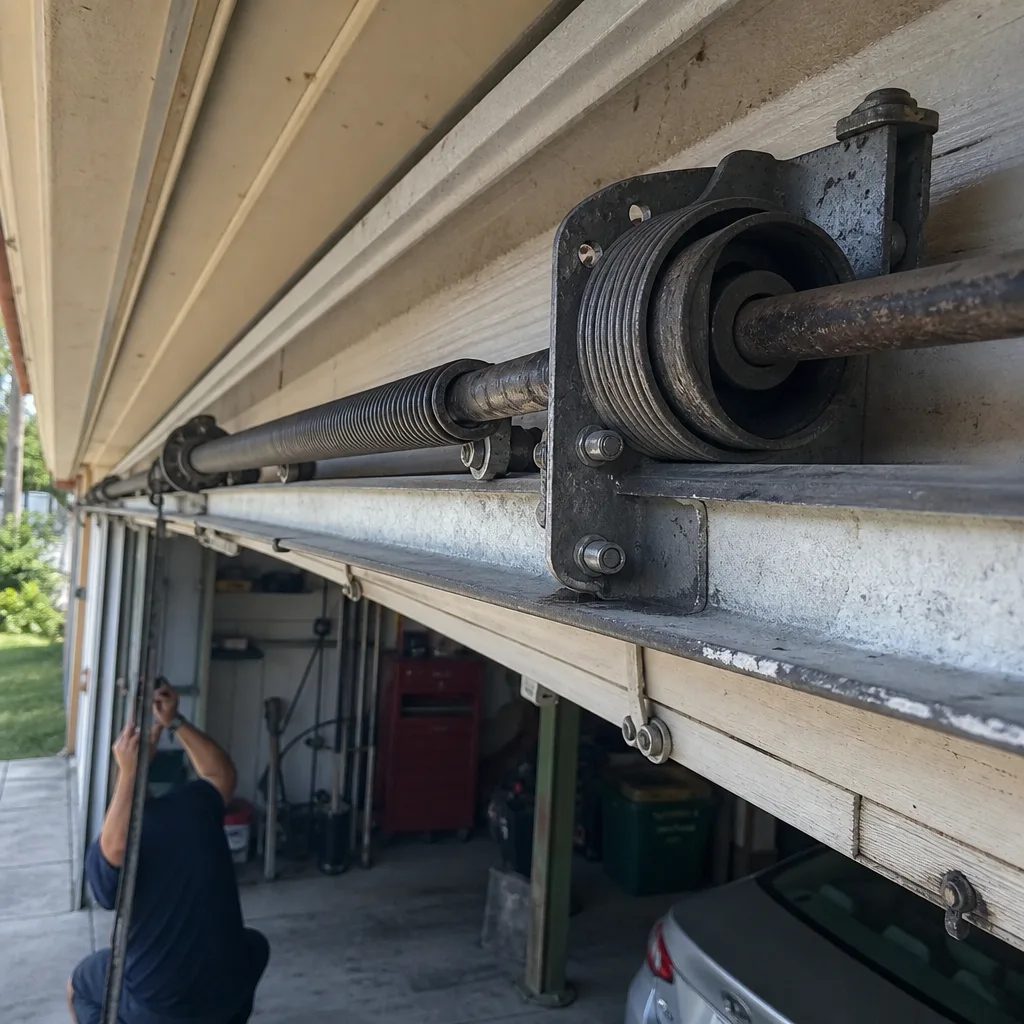 Before
 After
AfterTable of Contents
- Davie’s Two-Season Model: Why the Traditional Calendar Fails Here
- The April-May Hurricane Prep Checklist
- The December-January Post-Season Inspection
- Why Dry Season Is the Smart Time for Spring Replacement in Davie
- Heat, UV, and Asphalt: What Davie’s Climate Does to Seals and Panels
- Your Documentation Schedule: What to Photograph in April and December
- What Seasonal Garage Door Care Costs in Davie
- Common Mistakes to Avoid
- When to Call a Professional
- Frequently Asked Questions
Davie’s Two-Season Model: Why the Traditional Calendar Fails Here
Davie sits about 10 miles inland from the Atlantic, which means we get the humidity and salt air of coastal South Florida without the moderating breeze that waterfront homes enjoy. Average daytime humidity runs above 70 percent from June through November. Metal components corrode faster here than they do in Orlando or even Fort Lauderdale’s beachfront, because the inland heat bakes salt-laden moisture onto surfaces rather than blowing it past.
The traditional garage door maintenance calendar was written for places with real winters and real autumns. It tells you to lubricate in spring, inspect in fall, and winterize before the freeze. In Davie, that structure collapses. Our equivalent of winterizing is hurricane preparation. Our equivalent of fall inspection is the December dry-season walkthrough. If you follow a generic guide and lubricate your springs in October, here’s what actually happens: the lubricant goes on top of six months of accumulated corrosion, the moisture still in the air gets trapped under the coating, and by June your springs are carrying flaking metal under a layer of grease. We see the result in the spring months and early summer, when torsion springs that could have lasted another two or three years snap at the coil.
Here’s the framework we use with Davie homeowners:
- April to May: Preparation window. Two to three weeks of dry air, lower humidity, and enough time before the first real storm threat. This is when you lubricate, inspect, tighten, and document. It’s also when you replace anything that won’t survive another hurricane season.
- June to November: Hurricane season. You’re not doing maintenance here. You’re fixing failures quickly. The door takes the most abuse during these months, and it’s the worst time to discover your emergency release doesn’t work.
- December to January: Post-season inspection. The storms are done, the humidity has dropped, and you have clear evidence of what the season did to your door. This is when you repair damage, compare photos against your April baseline, and plan any replacement work for the coming months.
If you’re not already on this cycle, the best time to start is the next dry window you can catch. That’s usually November or December, when the humidity breaks and the hurricane season winds down. A full inspection then sets your baseline, and the following April becomes your first preparation window with actual documentation to work from. For help getting started, visit our Garage Door Repair in Davie page for inspection and repair details.
The April-May Hurricane Prep Checklist
Hurricane prep for a garage door isn’t just about boarding up windows. The garage door is the largest single opening on most Davie homes, and if it fails during a storm, the pressure change can lift your roof. Building codes in Broward County require garage doors to meet wind-load ratings for exactly this reason. But a door that meets code on paper only holds up if its components are actually in working order.
Here’s the April-to-May checklist we recommend for every Davie homeowner, in order of priority:
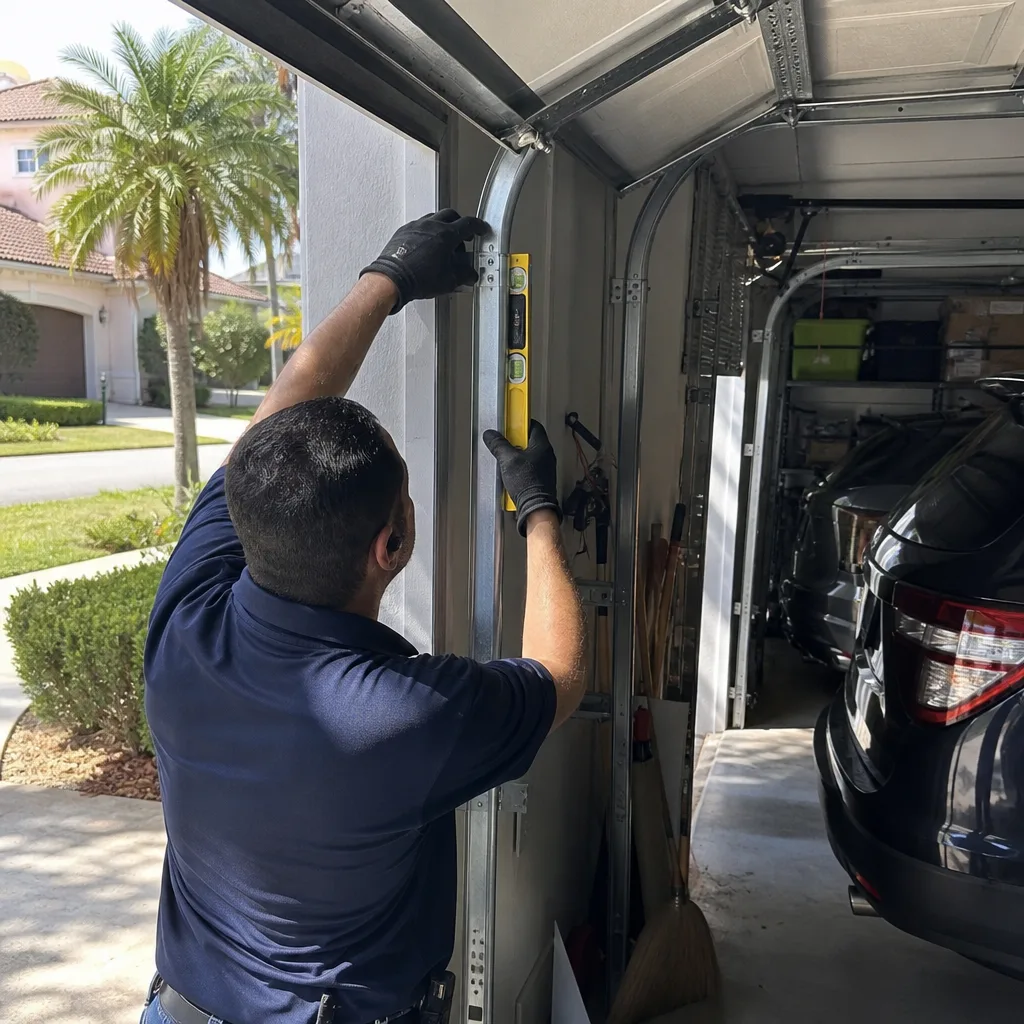
- Test the emergency disconnect function. Pull the red handle while the door is closed. The door should release from the opener carriage immediately. Then manually lift the door. It should feel balanced, meaning it holds at the halfway point without you supporting it. If it drops or shoots up, the springs are wrong or worn. Reconnect the carriage and run a full open-close cycle.
- Check the bottom seal for gaps and vertical cracks. Run your hand along the inside bottom of the door while it’s closed. Daylight showing through means water will find it during a storm. Davie gets street-level flooding in some neighborhoods, and a quarter-inch gap in the seal is enough to let standing water through.
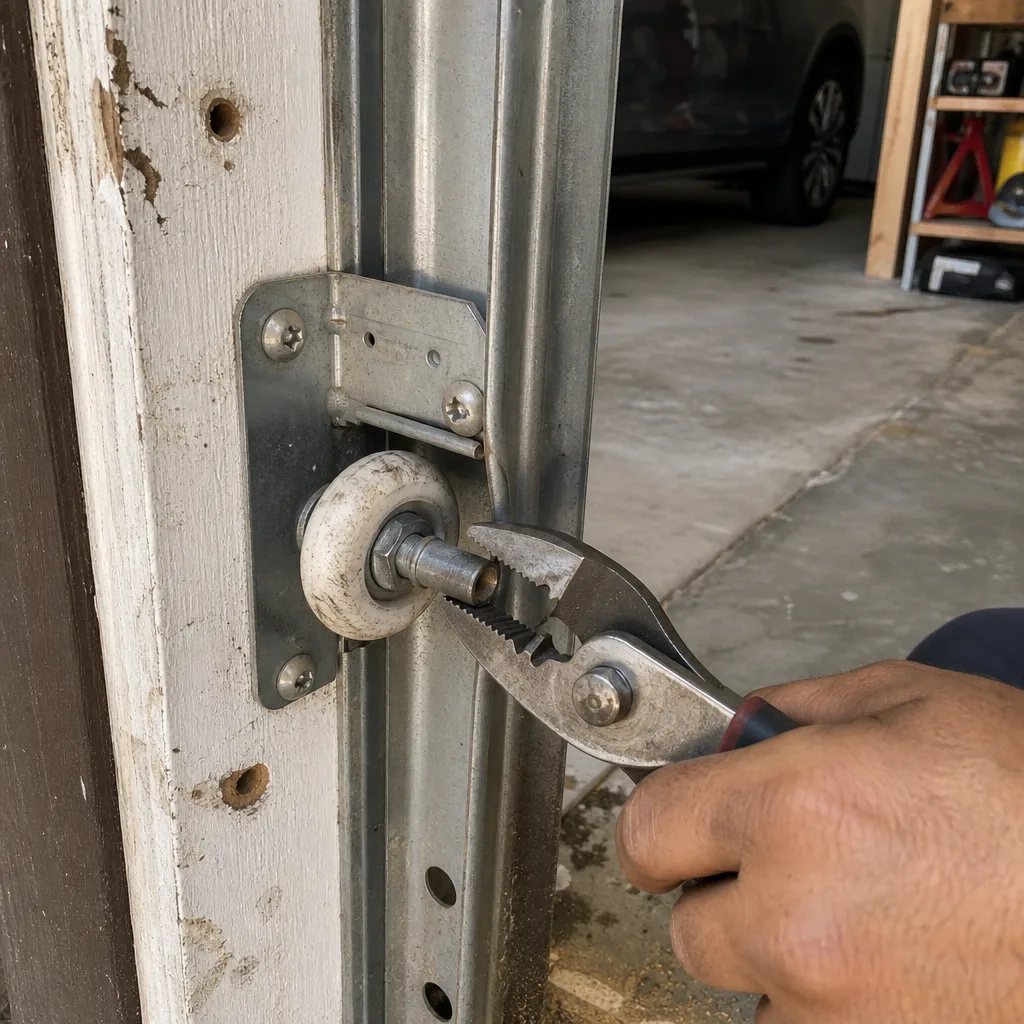
- Inspect the track anchor bolts. The vertical tracks are bolted into the door frame at multiple points. In Davie’s humidity, the wood around those anchors expands and contracts. Loose anchor bolts let the track flex during high winds, which can derail rollers and leave the door jammed open. A 9/16-inch socket typically fits; tighten any bolt that turns without force.
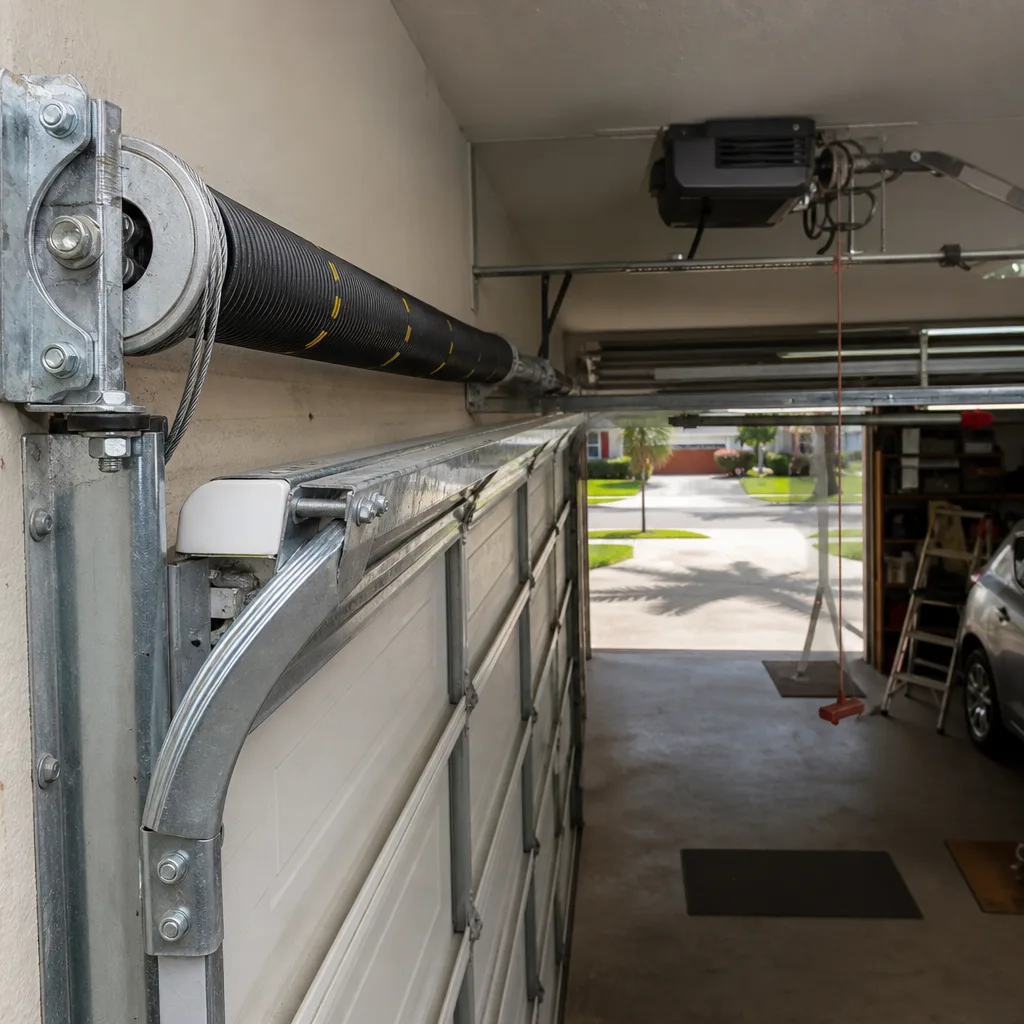
- Lubricate the moving parts. Torsion springs, hinges, rollers, and the opener chain or screw. Use a silicone-based or lithium-based garage door lubricant, not WD-40. WD-40 is a solvent and will strip existing lubrication. Apply to the spring coils, the hinge pivot points, and the roller stems (not the nylon wheel itself). Wipe away excess. This is the one time of year lubrication actually serves you in Davie, because the dry April air lets it penetrate before the humidity returns.
- Photograph everything. More on this in the documentation section below, but the short version: take photos of the springs, cables, bottom seal, hinges, and track anchors. These are your baseline for December’s comparison.
- Run the opener’s force-sensitivity test. Place a 2×4 flat on the ground under the door and close it. The door should reverse when it contacts the wood. If it doesn’t reverse promptly, the force setting is set too high, which is a safety hazard and can damage panels during a storm.
If anything on this list fails the test, don’t wait. A snapped spring in August costs the same as one in May, but you’ll be competing with every other Davie homeowner whose door failed mid-season. And if a storm is already bearing down, no repair company can get to you. The preparation window exists for a reason. If you find problems during this checklist, our Garage Door Repair in Davie service covers everything from cable replacement to full spring replacement, all with written pricing before any work begins.
The December-January Post-Season Inspection
Once hurricane season ends and the dry air settles in around late November, you have about three months of low humidity to handle repairs without fighting corrosion. This is the inspection that tells you what the season actually did to your door. It’s not a prep check; it’s an evidence review.
Start by pulling up your April photos. If you didn’t take any, this is the year to start. The comparison is what turns a casual look into an actual inspection.
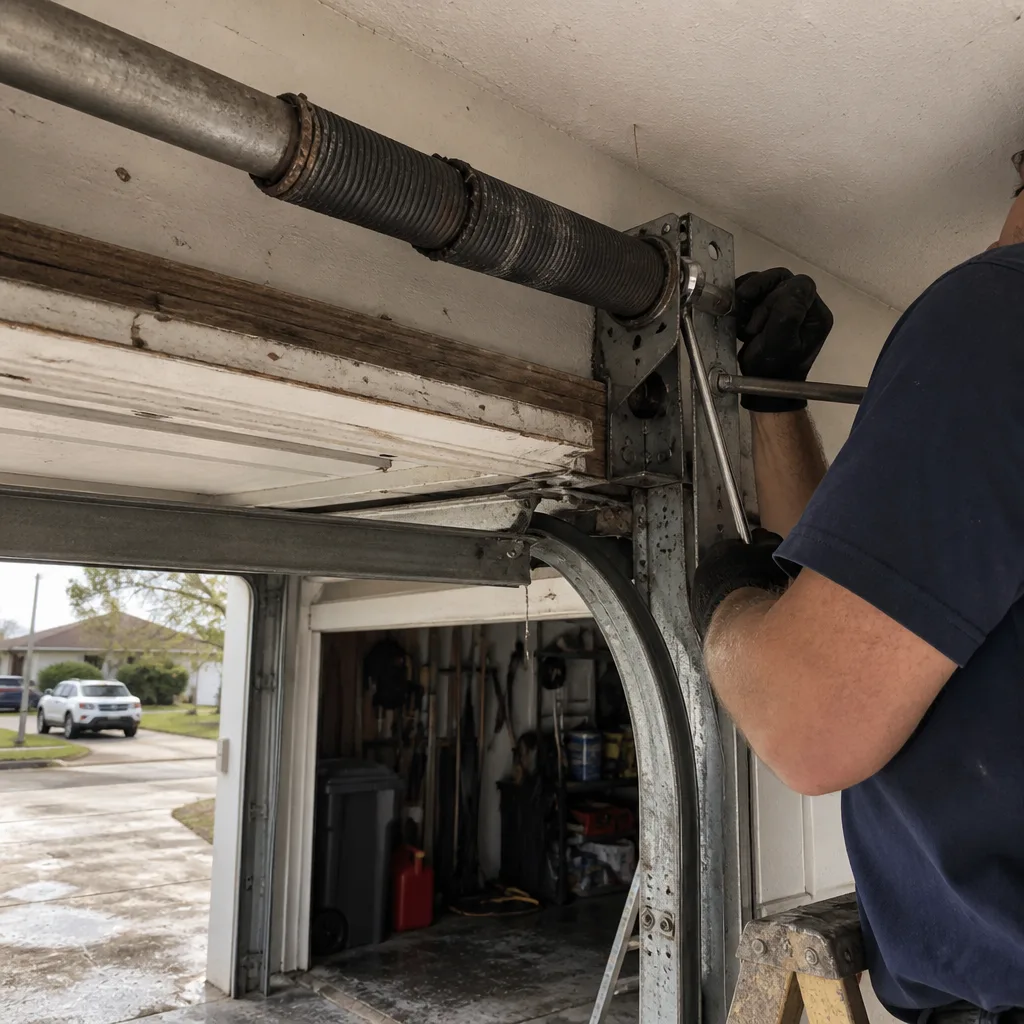
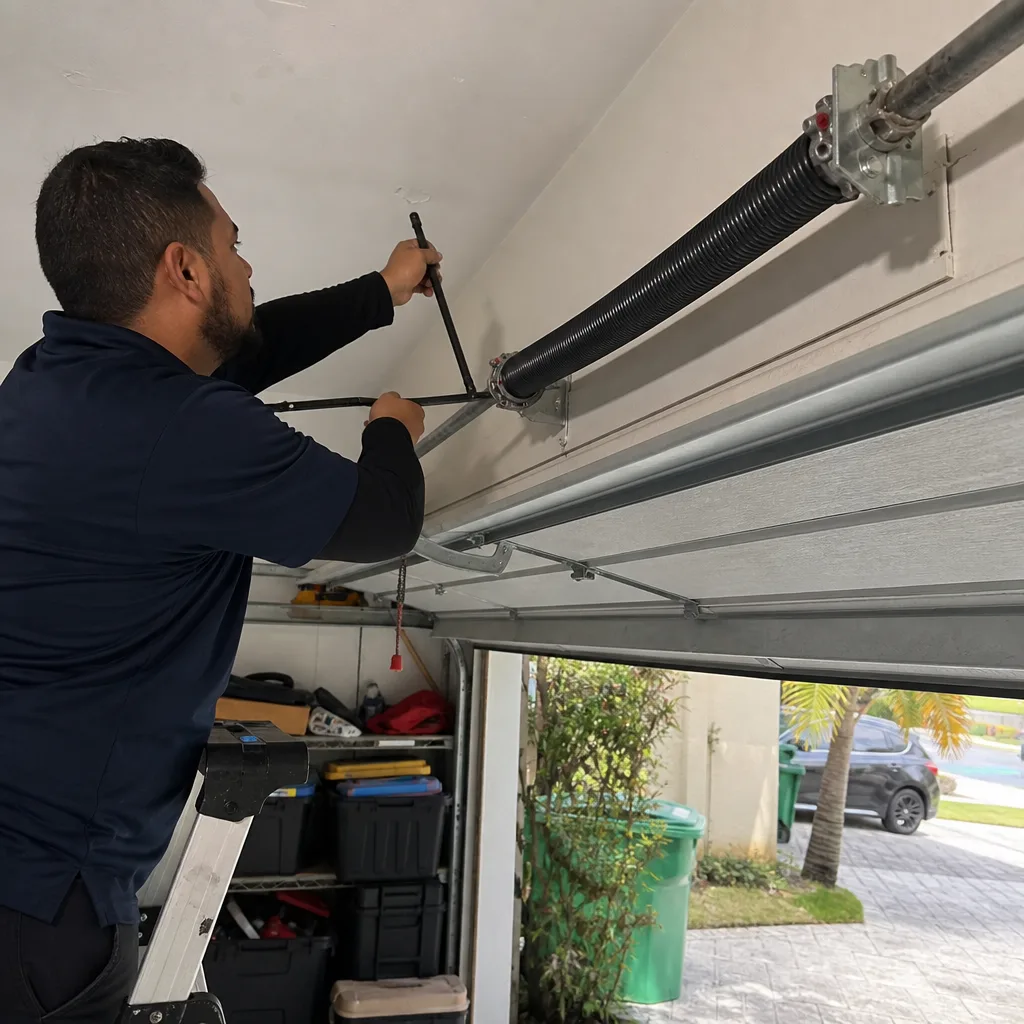
- Compare spring condition. Look at the coils in April’s photo, then look at them now. Flaking rust, widening gaps between coils, or a visible “neck” where the spring stretches near the bearing: all signs the spring has lost tension or is approaching failure. Torsion springs typically last 10,000 to 20,000 cycles in South Florida conditions, which translates to roughly 7 to 12 years for most Davie households. If your springs are original to a home built before 2015, they’re nearing the end of their expected life and this dry window is the time to replace them.
- Check the bottom seal for cracking. The seal material, typically rubber or vinyl, hardens and splits under UV exposure. A seal that was soft in April may show vertical cracks by December. Davie’s sun is more damaging than most homeowners realize: bottom seals here typically need replacement every 2 to 3 years on concrete driveways and every 3 to 4 years on asphalt, as asphalt reflects less heat back onto the seal. If yours is cracked, you have a few months before the next rainy season starts again, and replacement is cheap.
- Inspect cables for rust and fraying. The lift cables are steel, and if rust has set in near the bottom brackets, they’re compromised. Frayed strands are an immediate replacement item. A cable that snaps while the door is moving can throw the door off-balance and cause further damage. This is a part we photograph during every Servo Garage Doors Davie home inspection, because damage is often visible only when the door is under tension.
- Test balance again. The December balance test tells you how much spring fatigue occurred during the season. A door that held at halfway in April but slowly drops now means the springs have lost measurable tension, even if they haven’t snapped. That’s your early warning signal.
- Photograph everything again. December’s photos become April’s comparison set. A two-point record means you can actually see change over time, rather than trying to remember what the springs looked like eight months ago.
Why Dry Season Is the Smart Time for Spring Replacement in Davie
If you’ve been told to replace your springs in the fall because that’s when contractors have availability, be careful. The logic of chasing an open schedule ignores what humidity does to new metal.
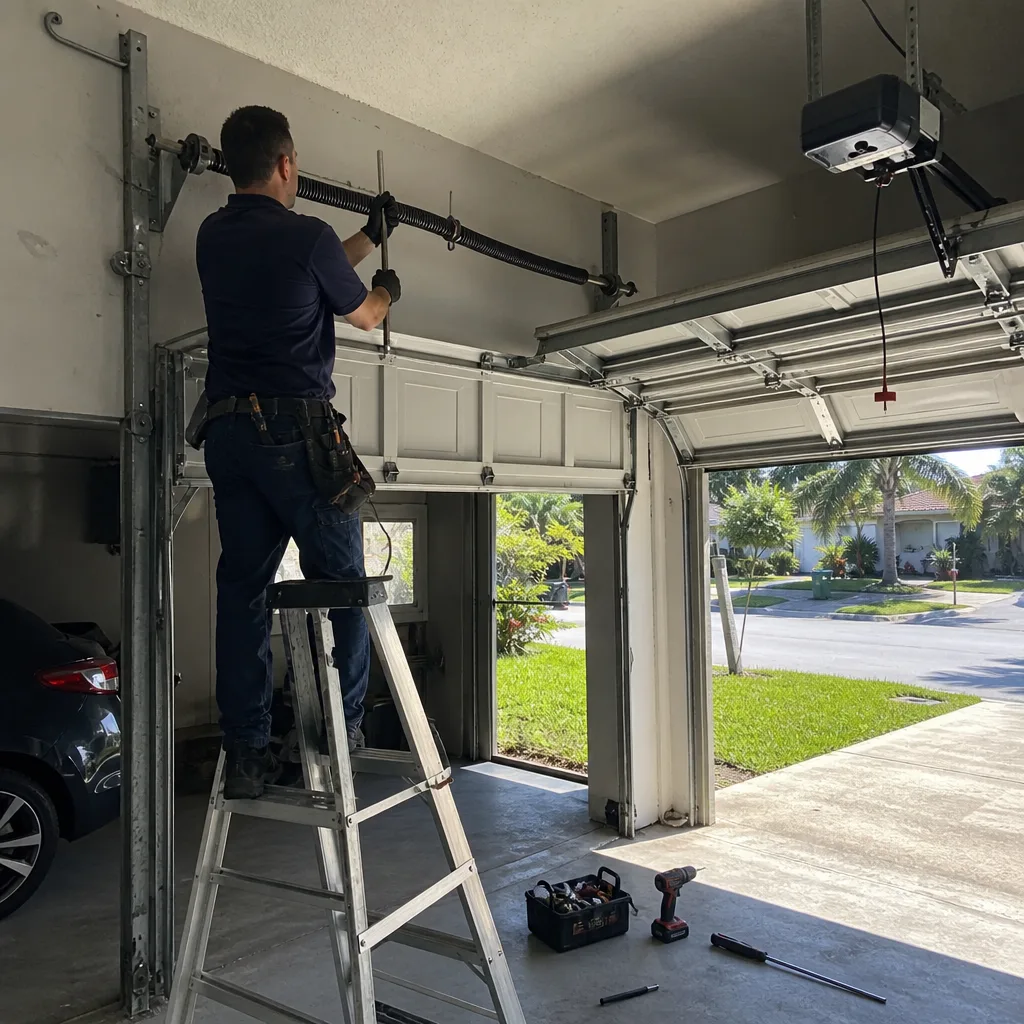
When a torsion spring is brand new, its wire has a mill finish or a thin coating. In Davie’s June-to-November humidity, that new surface begins corroding within weeks. The critical period is the first 30 to 60 days after installation, when the spring is still exposed and the coating hasn’t fully settled under load. Install a new spring in August and its corrosion clock starts immediately. Install that same spring in December or January, and it gets two to three months of relatively dry air before the next humid season arrives. In practical terms, a dry-season replacement can add two to four years to the useful life of the springs in Davie conditions. We see the difference in our own records: springs we replace in the dry window consistently outlast springs replaced mid-summer by a measurable margin.
This isn’t a paper theory. It’s observable in the field. A torsion spring measured at 0.250-inch wire diameter that gets installed in January shows noticeably less surface oxidation by the following September than the same spring installed in July. If your springs are worn and you have the choice, make the choice that gives the new parts an easier first few months.
The cost in Davie for torsion spring replacement typically runs $180 to $340 per spring, including labor, depending on wire diameter, spring length, and cycle rating. At Servo Garage Doors Davie home, we photograph the failed spring before quoting the replacement, per Clause 4 of The Haven Standard, and the written price you approve is the price you pay. No surprises when the technician arrives, because everything is on paper before work starts.
Heat, UV, and Asphalt: What Davie’s Climate Does to Seals and Panels
Davie’s climate attacks garage doors in two ways that northern climates never have to deal with: reflected heat and unrelenting UV. Understanding these two forces explains most of the wear patterns we see on Davie doors.
Bottom seals fail from the bottom, which sounds obvious, but the mechanism matters. The seal sits on the driveway surface. If your driveway is concrete, which reflects more solar radiation than asphalt, the seal gets hit with both direct sunlight and reflected heat from below. Daytime surface temperatures on a concrete driveway in August can reach 140 degrees. The seal material, usually PVC or EPDM rubber, loses plasticizers at those temperatures and begins to harden and crack. On asphalt driveways, surface temperatures run 10 to 15 degrees cooler, and we consistently see seals last a year longer on asphalt versus concrete in the same Davie neighborhood.
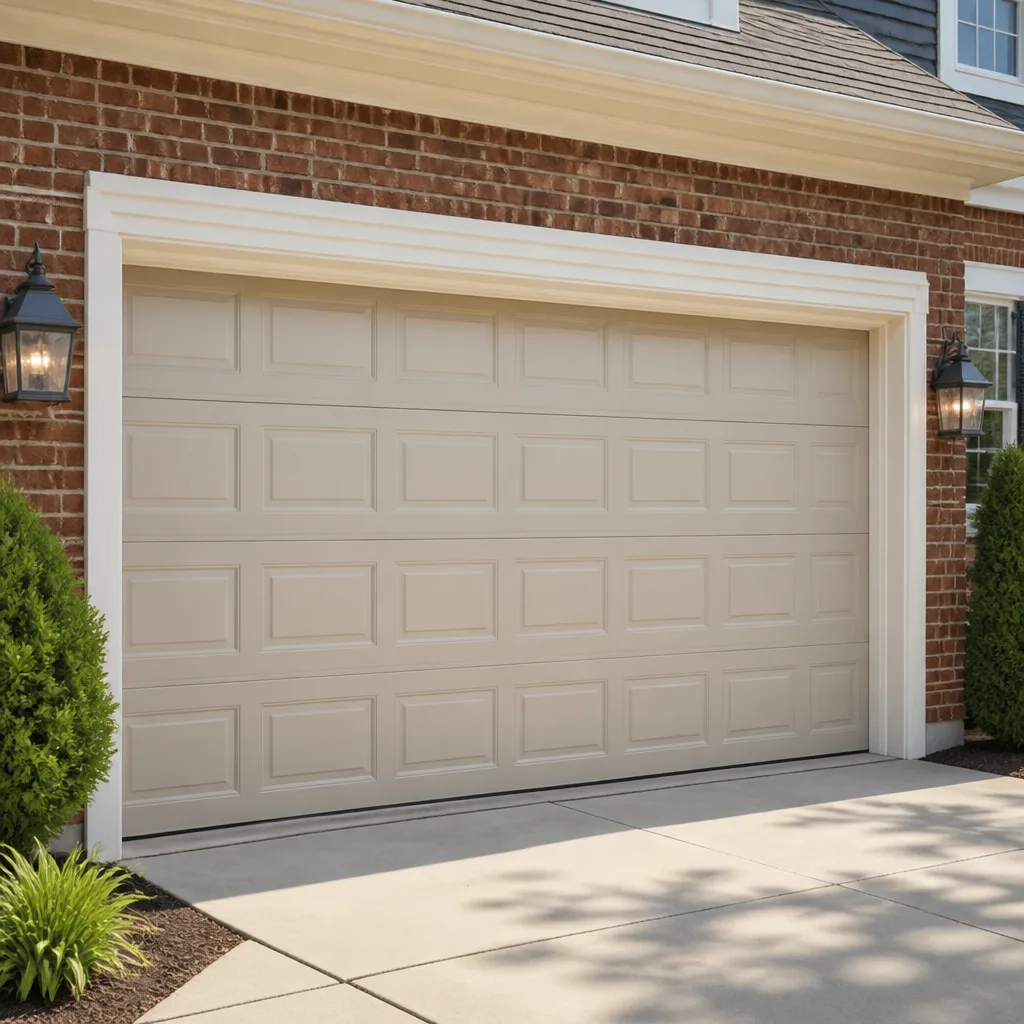
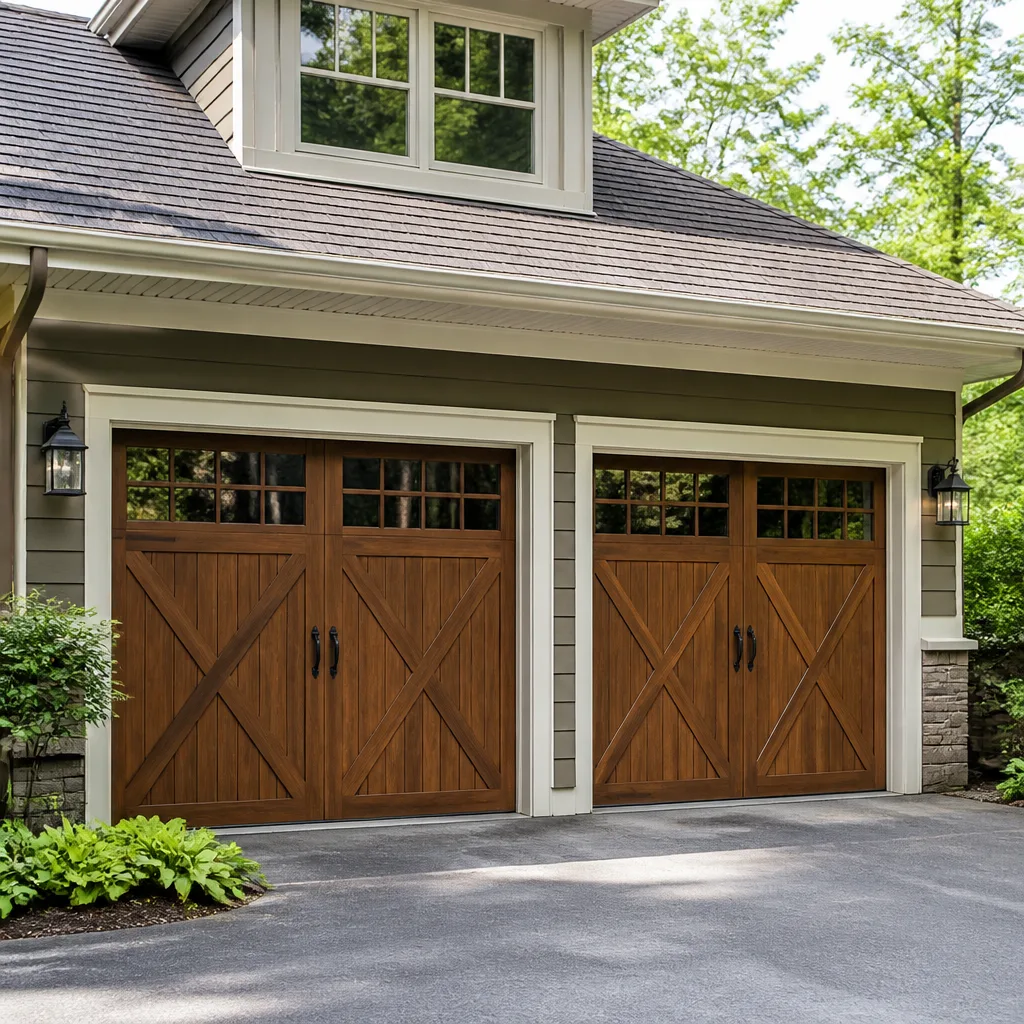
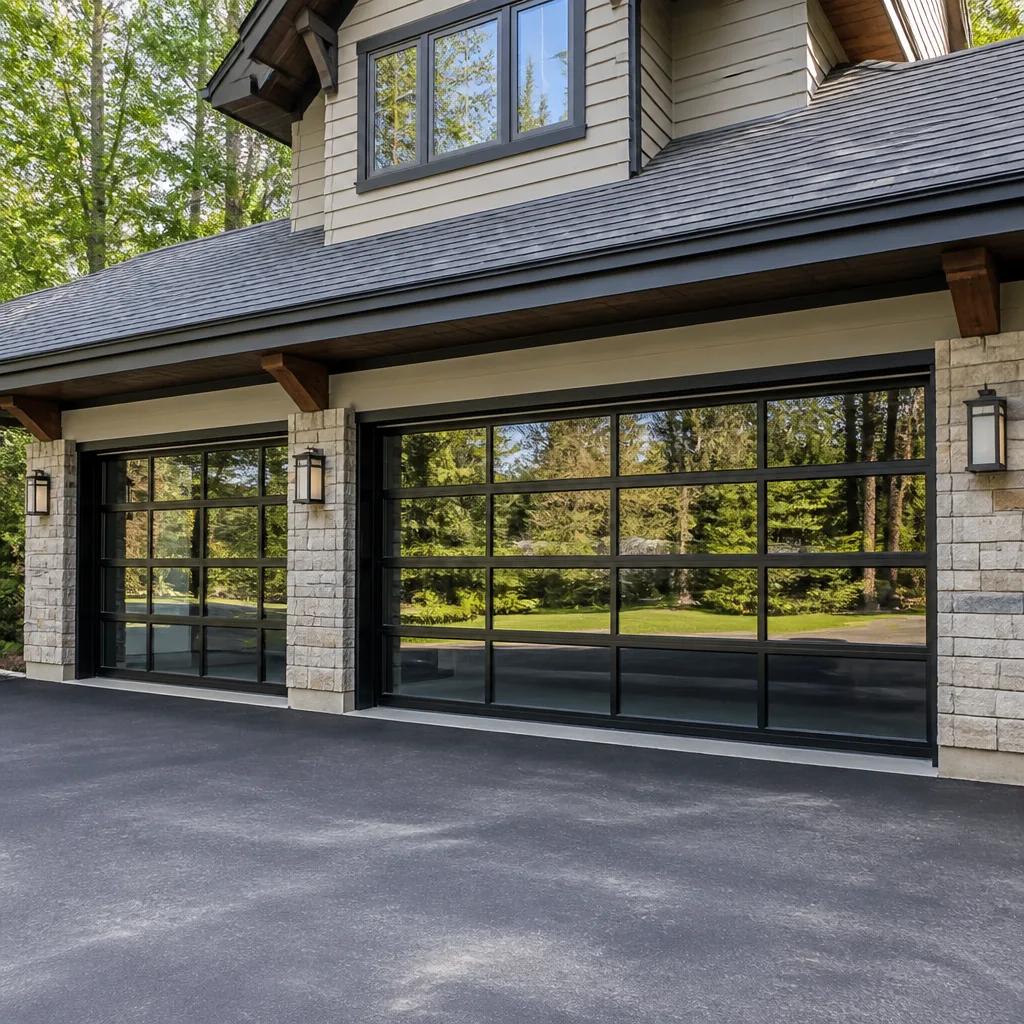
Panels age differently depending on material. Steel panels with factory paint hold up reasonably well in Davie, but the bottom panel, closest to the driveway reflection, fades faster than the upper panels. Aluminum panels are lighter and rust-resistant but dent more easily in hail or flying debris. Wood doors, while uncommon on newer Davie homes, need re-sealing every 18 to 24 months in this climate and will fail structurally within a decade if not maintained. If you’re replacing panels or getting a new door, the material choice matters more in Davie than in most markets. A good installer will ask about your driveway surface and sun exposure before recommending a panel material. For new door work, our Garage Door Installation in Davie guide covers the material options and what each one costs in this market.
Your Documentation Schedule: What to Photograph in April and December
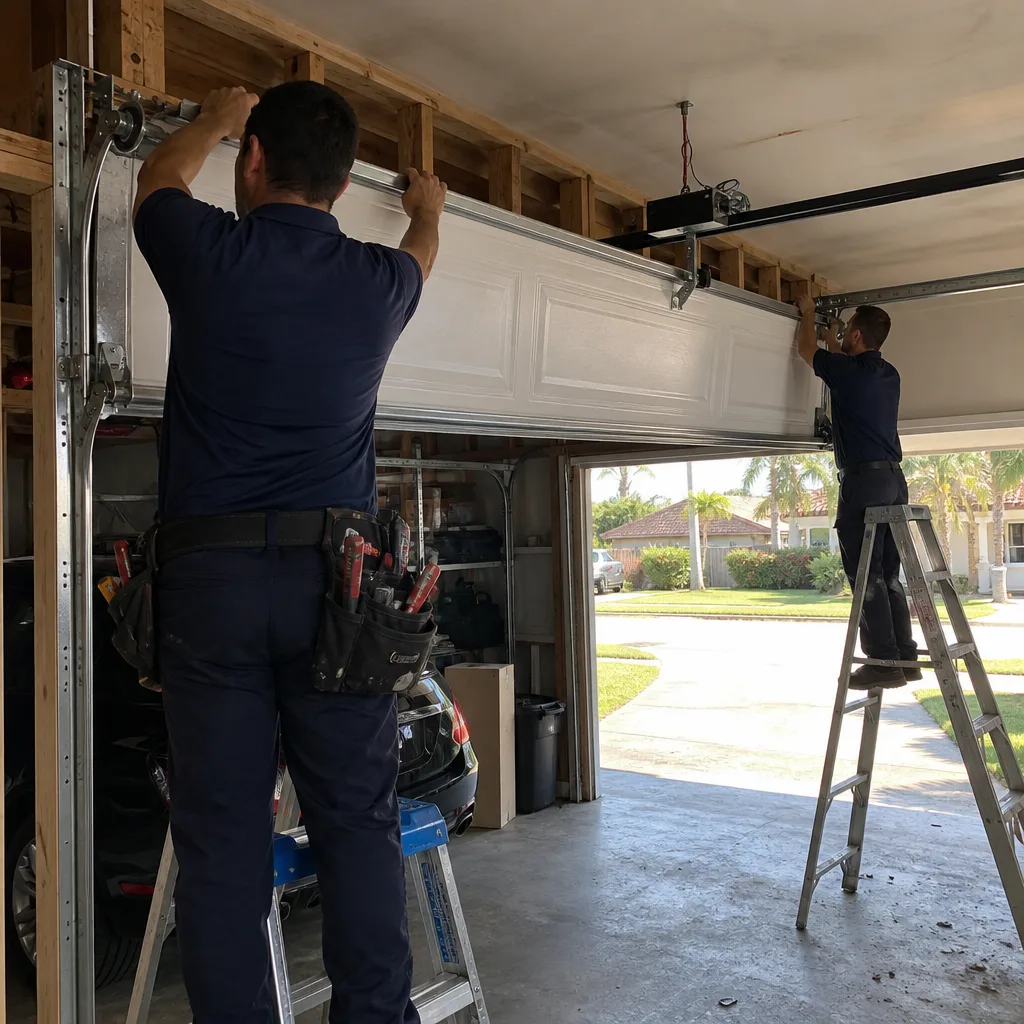
Most Davie homeowners can’t tell you when their springs were last replaced, what the cables looked like a year ago, or whether the bottom seal has gotten worse since spring. And that’s not their fault: nobody told them to document it. But a door is a mechanical system, and mechanical systems give you warning signs if you’re actually looking.
Here’s the documentation schedule we recommend. It takes 10 minutes twice a year and gives you a two-point comparison for every major component.
April Photo Set (Baseline)
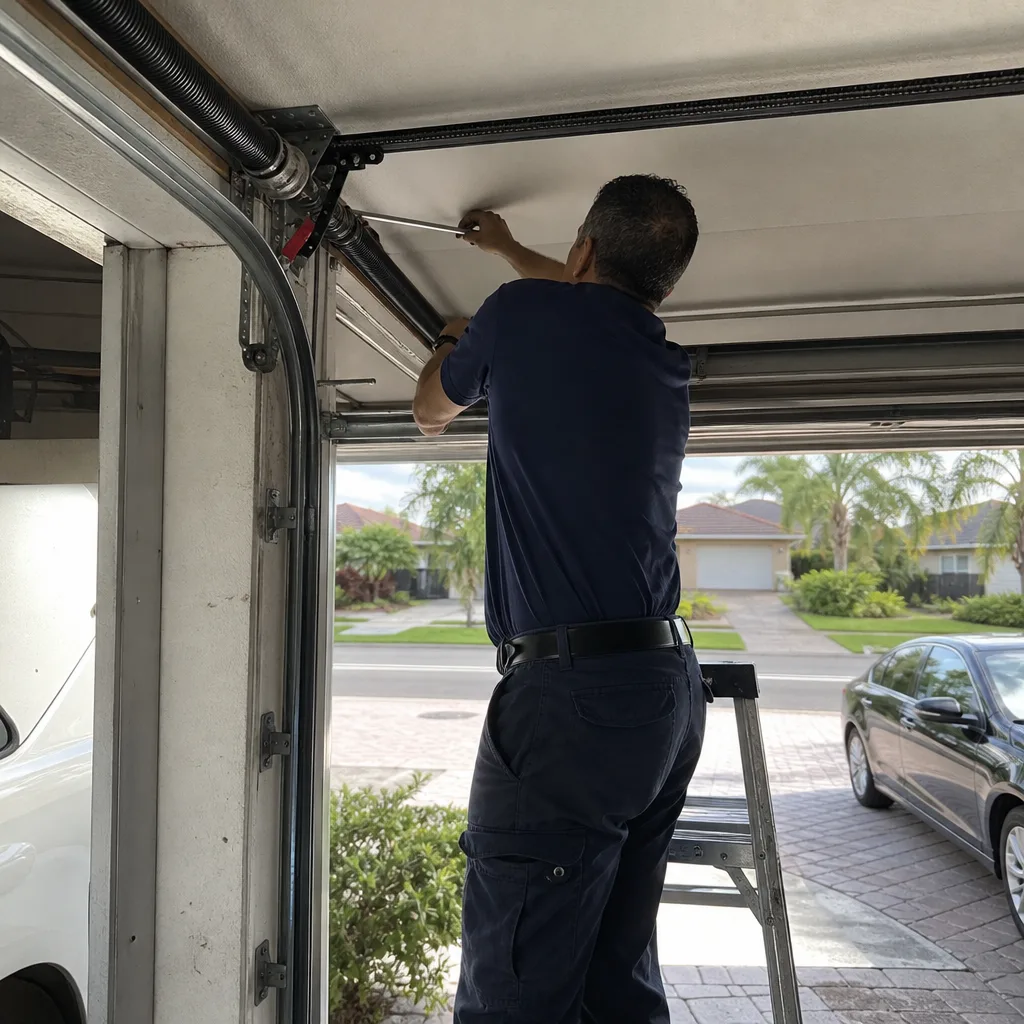
- Torsion springs. Stand on a stepladder and photograph the full length of each spring at eye level. Capture the coils clearly enough to see individual wire wraps.
- Lift cables. Both sides, focusing on the bottom bracket attachment and the first 12 inches of cable. This is where fraying starts.
- Bottom seal. Close the door and photograph from inside, along the entire width of the bottom seal. Note any daylight showing through.
- Hinges and track anchors. One wide shot of each side showing all hinge points and the track bolts.
- Opener unit. A photo of the unit, the chain or belt, and the emergency release handle.
December Photo Set (Comparison)
Repeat the same five photos from the same positions. The comparison tells you:
- Whether spring coils have rusted, stretched, or shifted
- Whether cable fraying has appeared or spread
- Whether the bottom seal has developed new cracks or gaps
- Whether any hinge or track bolt has moved
- Whether the opener chain has stretched and needs tension adjustment
If a component fails between December and April, the photo record establishes when the damage likely began. That’s useful for warranty claims, insurance disputes after storms, and simply knowing whether a technician is telling you the truth about what they found. This documentation practice is what we do for every customer as part of our standard service: a documented photo record of what we found and what we did, delivered on every visit. If you’re not doing it for yourself yet, start with the next dry window.
What Seasonal Garage Door Care Costs in Davie
Here’s what you should expect to pay in Davie for the most common seasonal maintenance and repair items. These are Davie market ranges, not national averages.
- Professional inspection: $65 to $125
- Lubrication service: $65 to $100 (often rolled into inspection cost)
- Bottom seal replacement: $85 to $160 including parts and labor
- Torsion spring replacement (per spring): $180 to $340
- Cable replacement (both sides): $120 to $220
- Track anchor bolt tightening: $60 to $110 (often included with inspection)
- Panel replacement (single panel): $300 to $600 depending on material and size
- Full door replacement: $1,200 to $4,500 depending on size, material, insulation, and opener setup
These prices assume a working door that doesn’t need emergency attention. Emergency calls in Davie during hurricane season can run 20 to 40 percent higher, which is exactly why the April-to-May prep window is worth taking seriously. The repair that costs $300 in April costs $420 in September, and you’ll wait longer for it.
At Servo Garage Doors Davie home, the price you’re quoted is a flat, written price delivered before any work starts. That’s Clause 1 of The Haven Standard, and it’s not negotiable on our end. You’ll approve the scope and the dollar figure in writing, and that’s the figure on the final invoice. For more on how we handle repair pricing, see our Garage Door Repair in Davie page.
Common Mistakes to Avoid
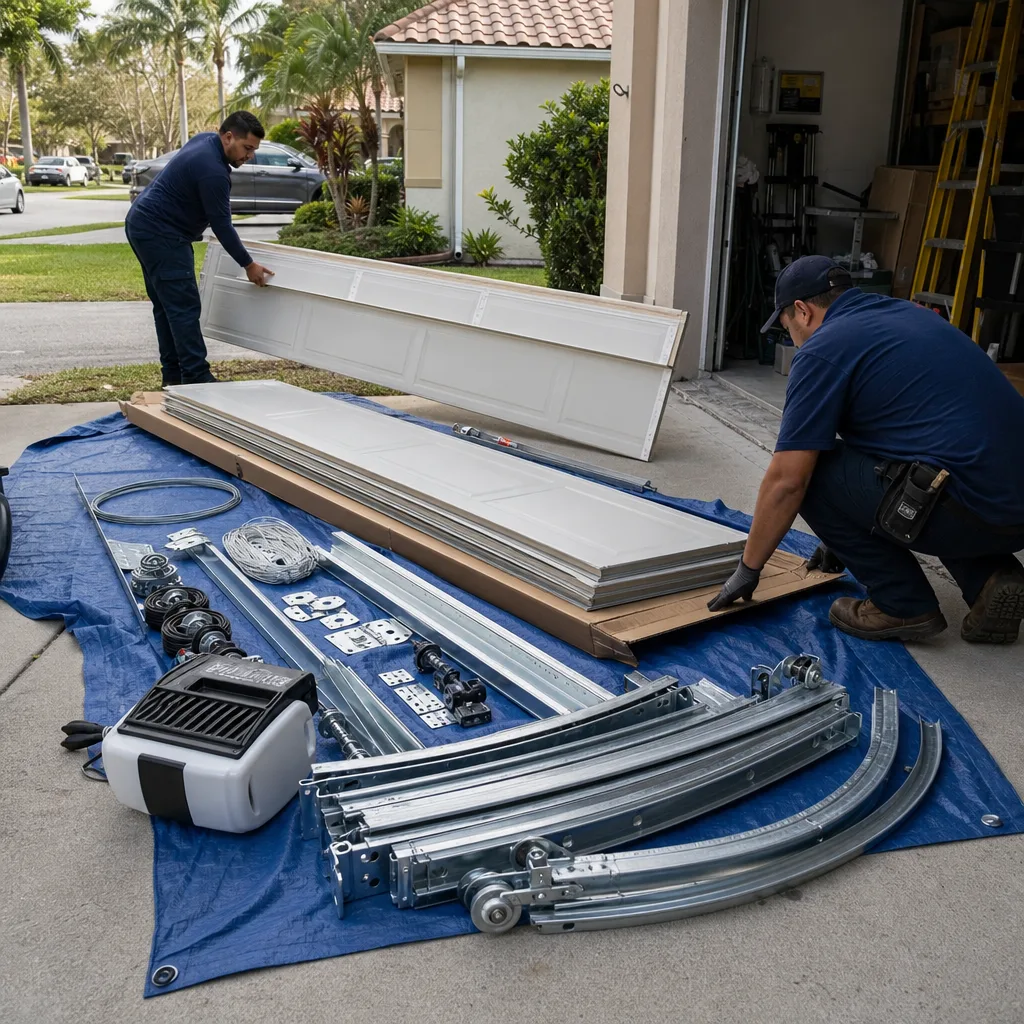
- Lubricating in October. This is the big one in Davie. October is still humid, and lubricating over corrosion traps moisture against the metal. If you only lubricate once a year, do it in April.
- Skipping the balance test. The manual balance test can be done in 60 seconds and it tells you more about spring health than any visual inspection. A door that drops from the halfway point means weakened springs, full stop. Ignoring that signal is how doors fail at the worst possible time.
- Ignoring the bottom seal because it still “looks okay.” A seal can look fine from the outside while having hairline cracks that let in water during a storm. Run your hand along it and look for daylight. If you can see light, water will find the same gap.
- Replacing springs without a written quote. Some contractors in Davie quote a spring replacement over the phone, then “discover” additional work once the door is apart. The fix is simple: get the flat, written price before work starts, and refuse any on-site add-ons that weren’t in writing. Clause 1 exists for exactly this reason.
- Not testing the emergency release until you need it. If you haven’t pulled the red handle in a year, you don’t know if it works. During a power outage, the emergency release is the difference between getting your car out and being stuck. Test it in April and December.
- Photographing without establishing a baseline. A photo of rusted springs in December tells you nothing without an April photo to compare it to. Documentation only works as a series.
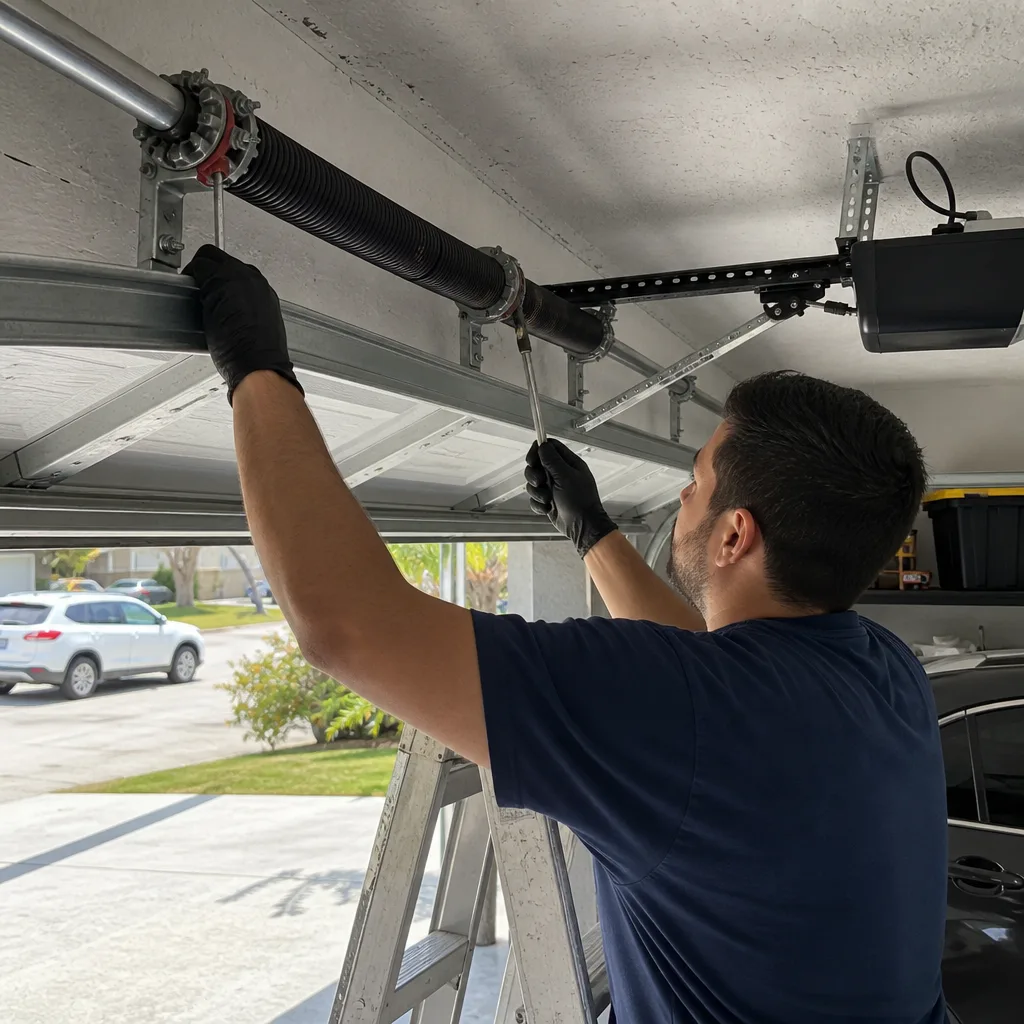
- DIY spring replacement. Torsion springs hold enormous tension, and a spring that releases that energy unexpectedly can cause serious injury. This is the one repair where the safety conversation matters. Hire a professional with the right tools and training. If you’re tempted to tackle it, call us instead; we’ll quote the job before you’ve even scheduled it.
When to Call a Professional
Some things on a garage door are DIY-friendly: tightening bolts, testing balance, photographing components, even replacing weatherstripping. Others are not. If you notice a snapped spring, frayed cables, bent tracks, or a door that’s off-balance and won’t stay in place, call a professional. Springs and cables are under extreme tension and can cause serious injury if they release while you’re working on them; the spring alone can carry several hundred pounds of stored force. If you hear a loud bang from the garage and the door won’t open, that’s almost certainly a broken spring, and you should stop using the door immediately. Servo Garage Doors Davie offers free estimates in Davie; call (754) 704-3976 and we’ll give you a written price before any work starts. If it’s an emergency, the same number gets you a live person 24/7, and a named technician with an on-the-way text, not a callback window.
Frequently Asked Questions
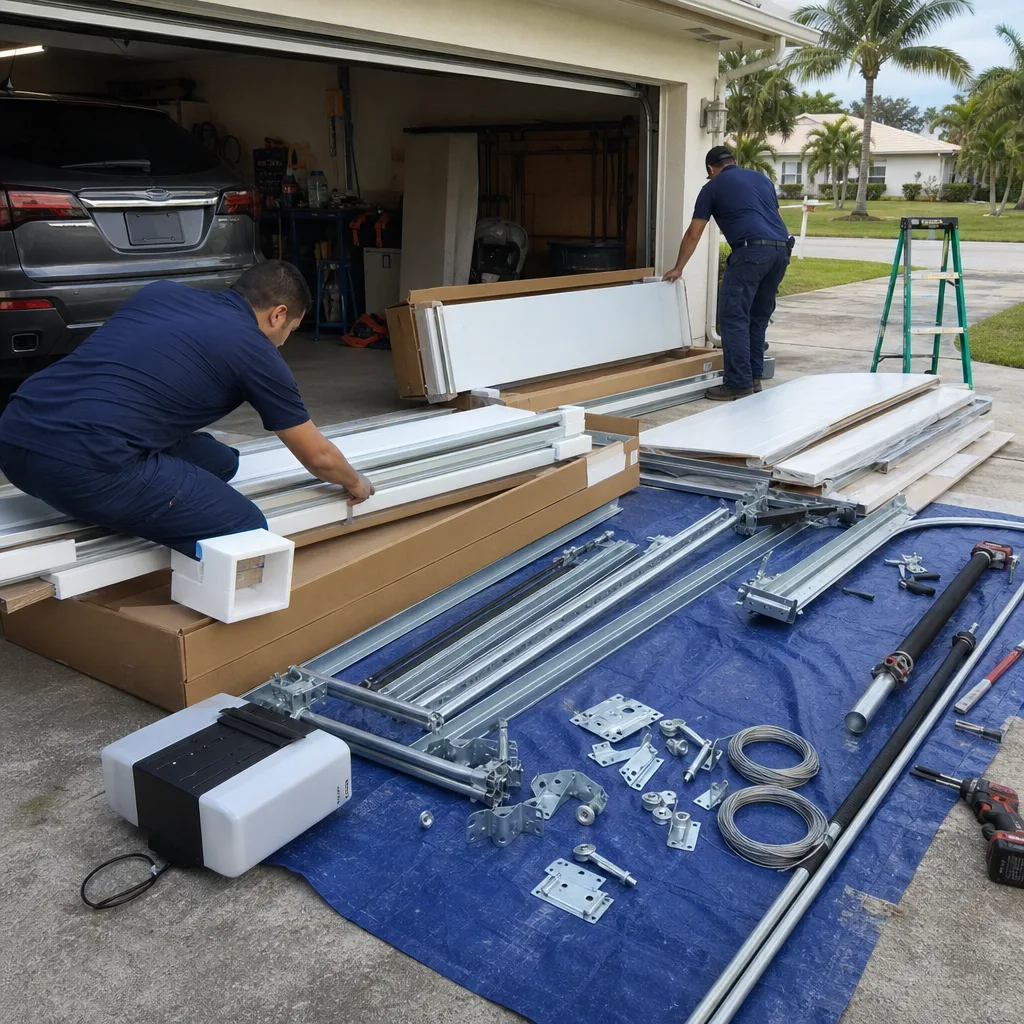
Twice a year is ideal in Davie: once in April before hurricane season, and once in December when the dry season starts. If you only do it once, do it in April. The dry air lets the lubricant penetrate metal surfaces before humidity arrives, rather than sealing moisture against the steel. Use a silicone or lithium-based garage door lubricant, not WD-40. Call (754) 704-3976 if you want us to handle it as part of a full inspection; the written quote covers lubrication, inspection, and photo documentation.
In Davie, torsion spring replacement typically costs $180 to $340 per spring including labor, depending on wire diameter and spring length. Most doors have two springs, so expect $360 to $680 for a full pair. We quote the exact price in writing before any work starts, per Clause 1 of The Haven Standard. Call (754) 704-3976 for a free estimate on your specific door.
Yes, for emergency calls like snapped springs or a door jammed open, we offer same-day service in Davie. Our phones are answered by a live person 24/7, and emergency calls get a named technician with an on-the-way text. For non-emergency items like bottom seal replacement or inspections, we’ll schedule you within a few days. Call (754) 704-3976 to check today’s availability; estimates are always free.
In Davie’s humidity and heat, torsion springs typically last 7 to 12 years, which is shorter than the 10 to 15 years you’d see in a drier climate. The corrosive moisture in the air during hurricane season is the main reason. If your springs are 8 years old or older and you haven’t had them inspected recently, this dry season is the time to check them. A spring that fails during a storm is a much bigger problem than a spring replaced in January.
Our pricing doesn’t change during hurricane season. The price you’re quoted is a flat, written price delivered before any work starts, regardless of the date. What changes is availability; emergency calls compete with every other homeowner who needs help at the same time. That’s why we recommend the April-to-May prep window, so you’re not calling us mid-storm with a door that could have been fixed in May at the same price. Call (754) 704-3976 for a free estimate any time of year.
First, find the emergency release handle, usually a red cord hanging from the opener rail near the door. Pull it down to disconnect the door from the opener carriage, then try lifting the door manually. If it lifts easily and stays at the halfway point, the opener is the issue, probably a reset or a blown capacitor. If the door is very heavy or won’t stay up, you likely have a broken spring, and you should call us at (754) 704-3976. We’ll quote a spring replacement in writing before any work starts, and we’ll show you the photographic evidence of what we found, per Clause 4 of The Haven Standard.