
Last updated September 20, 2026
 Before
 After
After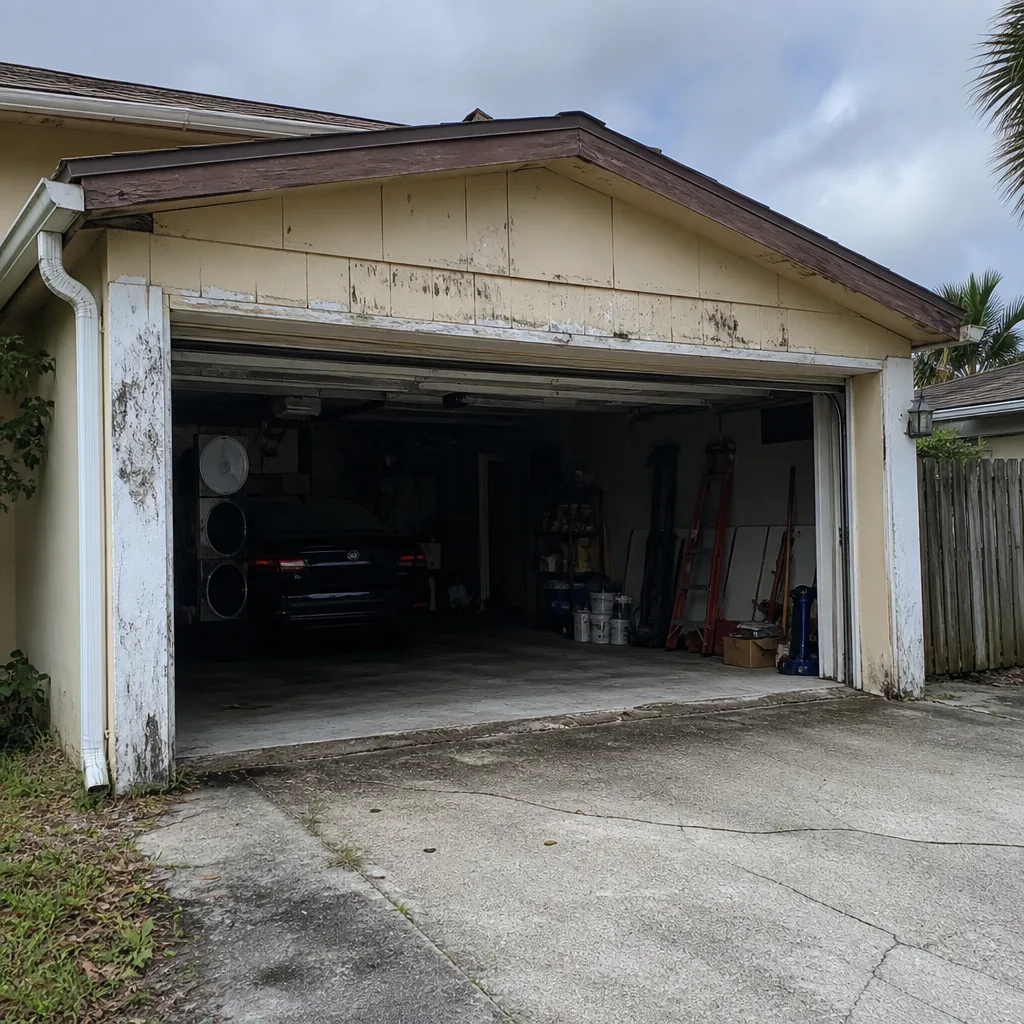 Before
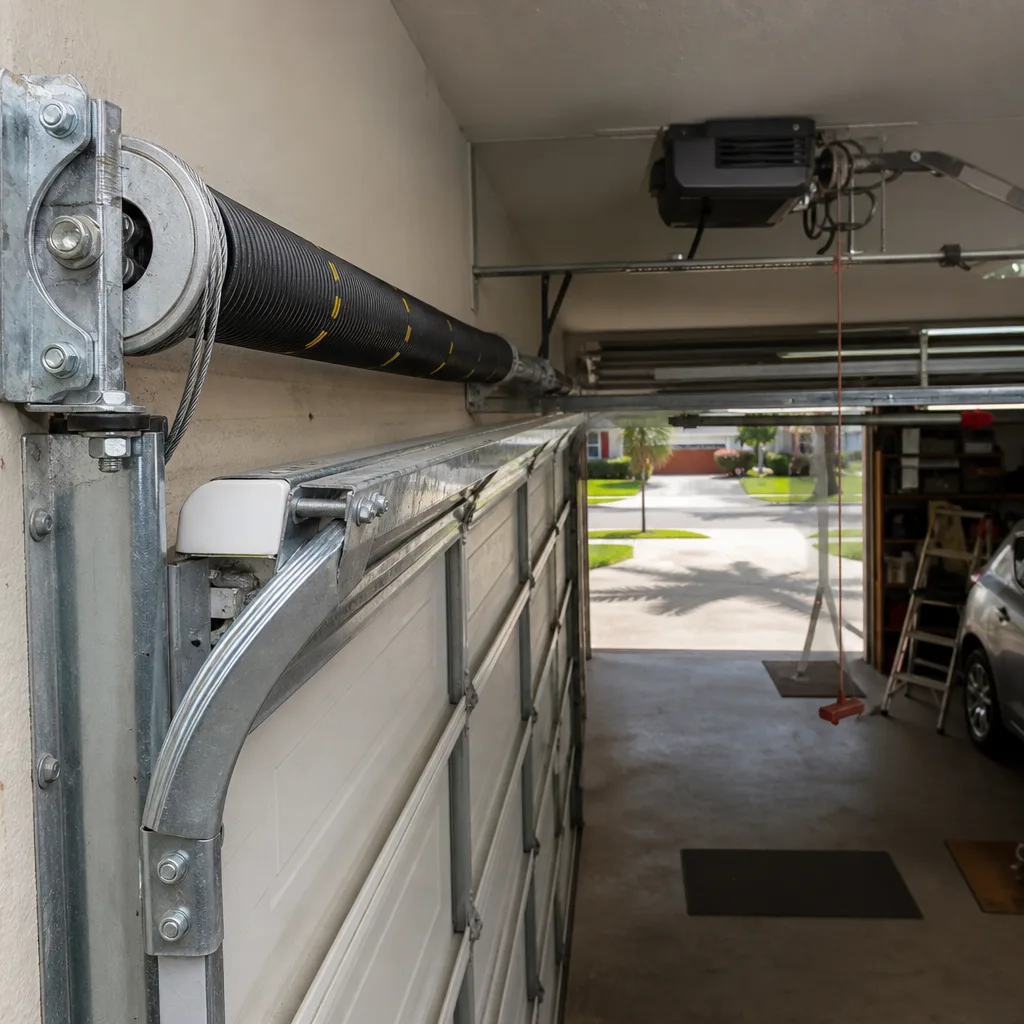 After
After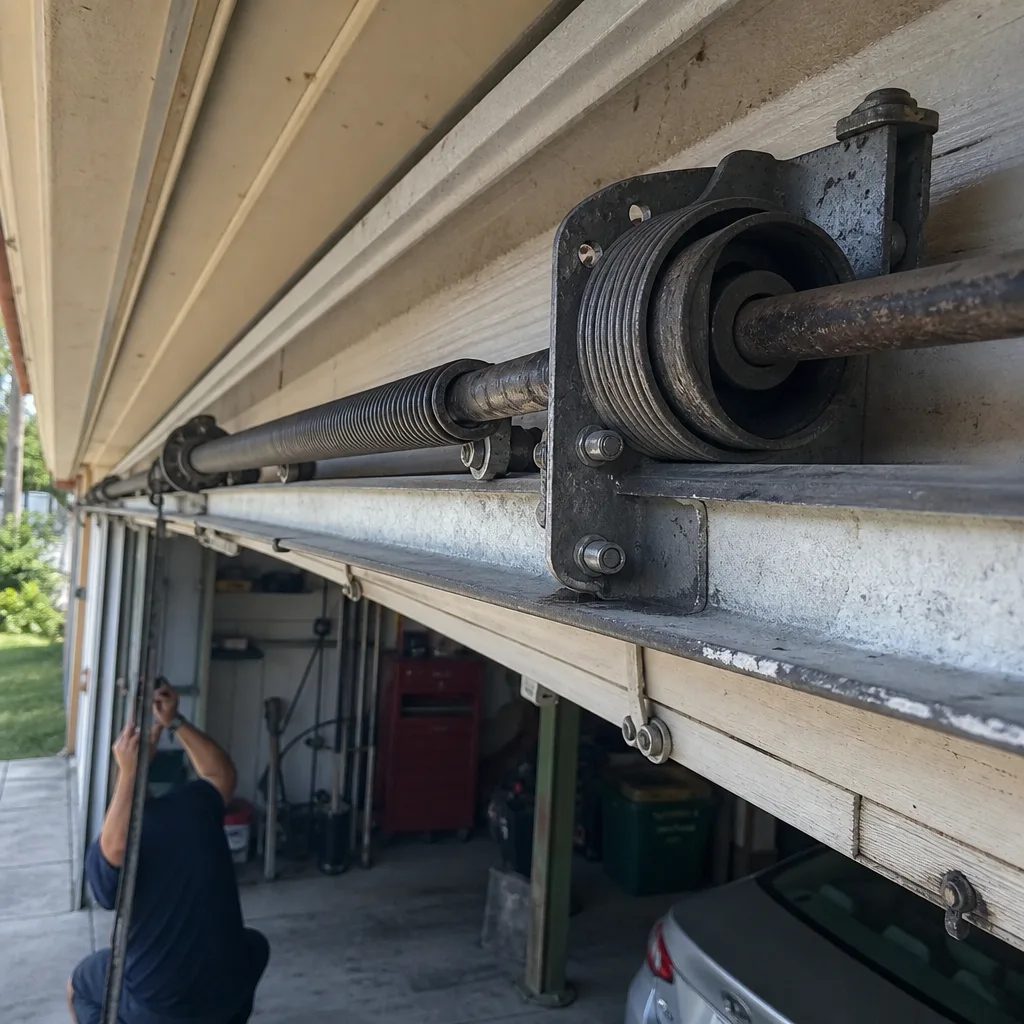 Before
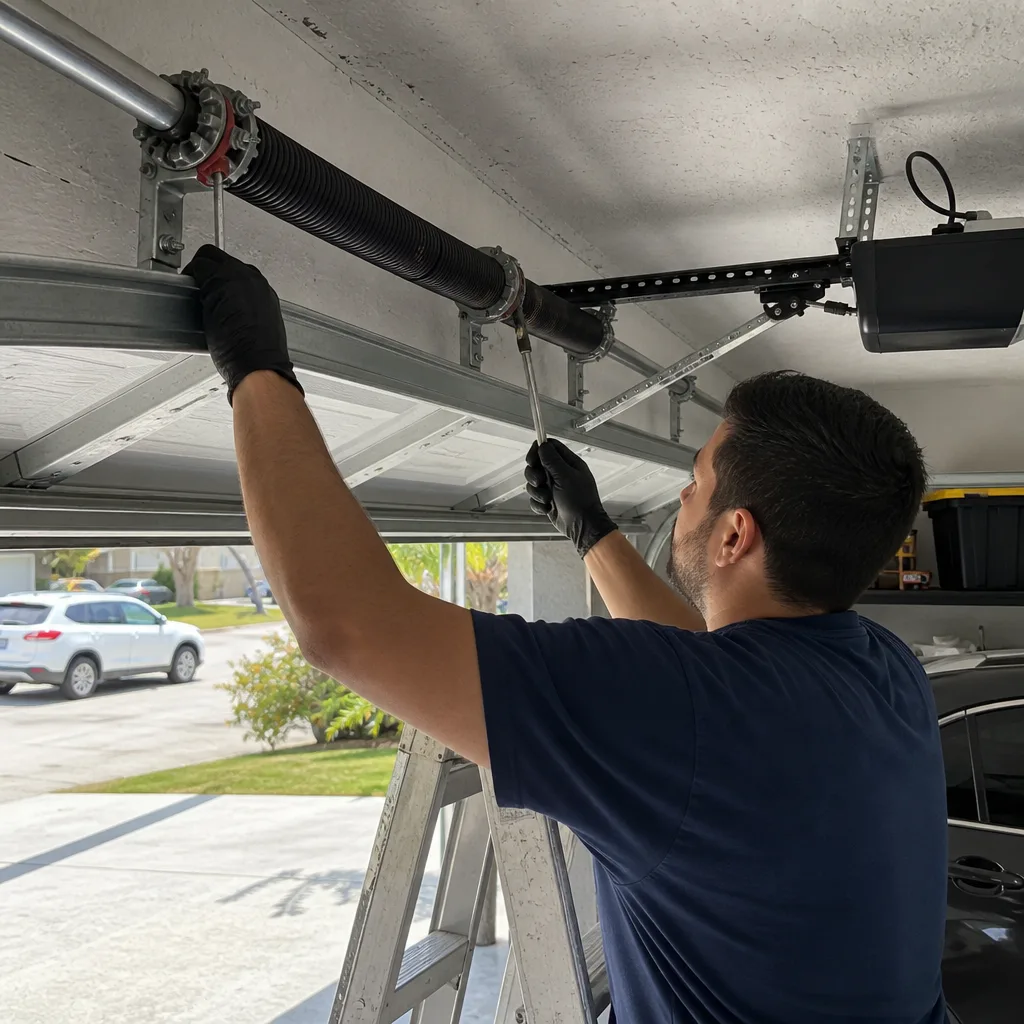 After
AfterTable of Contents
- When a Garage Door Permit Is Required in Davie
- Florida Building Code Section 1609: Wind-Load Requirements for Davie
- What a Product Approval Number Means and Where to Find It
- The Inspection Sequence: Rough-In, Installation, Final
- What Happens When an Unpermitted Door Is Discovered
- How to Retroactively Permit a Door Already Installed
- What a Permitted Garage Door Replacement Costs in Davie
- Common Mistakes to Avoid
- When to Call a Professional
- Frequently Asked Questions
- The Bottom Line
When a Garage Door Permit Is Required in Davie
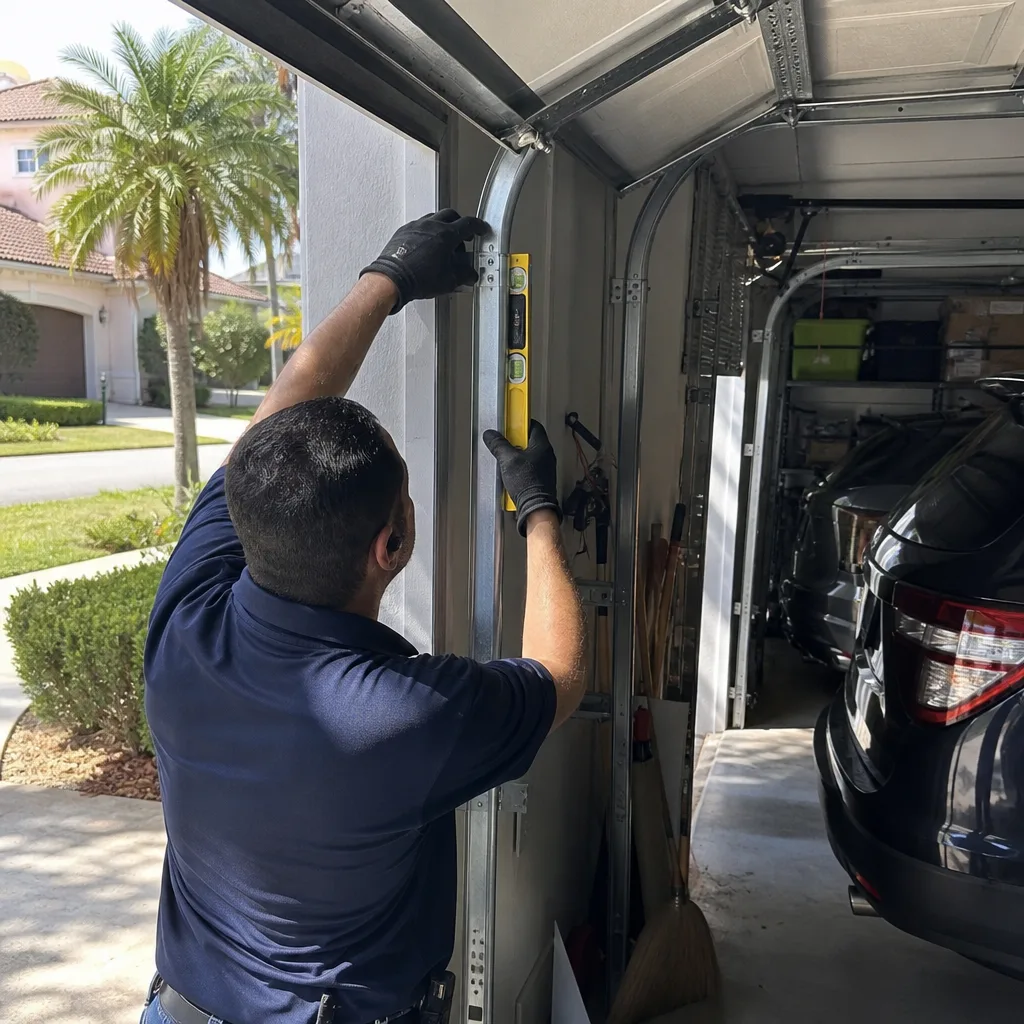
The Town of Davie Building Division follows Florida Building Code, and the rule is simple in principle: a replacement garage door needs a permit when the work changes the structural or wind-load characteristics of the opening. In practice, that covers more situations than most homeowners assume.
A permit is required in Davie when:
- The door size changes. If you’re going from a 16×7 to an 18×8 opening, that’s structural modification to the header and jambs. Permit required, no exceptions.
- The opening is being cut or enlarged. Any modification to the load-bearing wall around the garage opening triggers plan review and a permit.
- The existing door was never permitted. This is the one that surprises people. If the previous owner installed a door without a permit, and you’re now replacing it, the Town may require you to permit the replacement as the compliant fix. We see this regularly in older Davie homes built before the 2001 Florida Building Code took effect, especially in neighborhoods near Nova Southeastern University where houses changed hands frequently during the mid-2000s boom.
- You’re adding storm bracing or changing the door’s wind-load rating. Upgrading a non-impact door to an impact-rated or wind-load-rated assembly is a code-relevant change.
A permit is not required for what the Florida Building Code classifies as ordinary repair. Replacing a broken torsion spring, swapping out rollers and hinges, installing new weatherstripping, or replacing the garage door opener on an existing permitted door all fall under repair scope. The key distinction is whether the work restores the door to its original condition and original wind-load rating, or changes it.
“Same-for-same” replacement is the gray zone. The phrase gets thrown around as if it’s an automatic exemption. It isn’t. In Davie, replacing a door with the identical model and size still technically requires a permit if the door is part of a building envelope that must maintain its wind-load certification. The exemption language in FBC 105.2 applies to “minor work” and cosmetic replacement, but a garage door is a structural opening protection. When in doubt, call the Town of Davie Building Division at 6591 Orange Drive. Better to hear “no permit needed” from the inspector than to hear “why wasn’t this permitted” from a title company three years later.
Our technicians at Servo Garage Doors Davie home check permit history on every replacement we quote, because we’ve learned that the door you see isn’t always the door the Town has on record.
Florida Building Code Section 1609: Wind-Load Requirements for Davie
Florida Building Code Section 1609 sets the wind-load design requirements for every structure in the state, and Davie sits in a high-velocity wind zone that demands a specific minimum design pressure rating for garage doors. This isn’t a Miami-Dade-only issue, and that’s the misconception that costs Broward homeowners money. Davie’s wind speed design zone requires garage doors to withstand the same basic uplift and deflection pressures as doors in eastern coastal municipalities.
Under FBC 1609, Davie falls within a wind speed contour where the design wind speed for Risk Category II structures (typical single-family homes) ranges from 170 to 180 mph, depending on the exact parcel location. The Town uses the Broward County amendments to the Florida Building Code, which maintain these higher wind-load thresholds for all municipalities east of the Everglades, including Davie. Your door’s required design pressure is expressed in pounds per square foot, abbreviated psf, and varies by door height and width. A 16×7 door in Davie typically requires a design pressure rating of at least +24.0/-24.0 psf to pass plan review.
What this means for you as a homeowner:
- The door you buy must have a Florida Product Approval number. No approval number, no permit. It’s that simple.
- The approval must list Davie’s applicable wind speeds. A door approved for Orlando’s wind zone may not be approved for Broward County. The approval document states the maximum design pressure and the wind speed it covers.
- Installation must follow the manufacturer’s approved installation instructions. The permit application includes the installation details, and the inspector verifies them. A door that meets the wind-load rating but is installed with the wrong fastener schedule fails inspection.
- The garage door must be listed as an impact-protective system or be paired with an approved storm shutter system. Davie enforces the High-Velocity Hurricane Zone provisions that require opening protection. A wind-rated door is not automatically impact-rated if the design pressure was achieved through bracing and reinforcement rather than impact-resistant glazing or panel design.
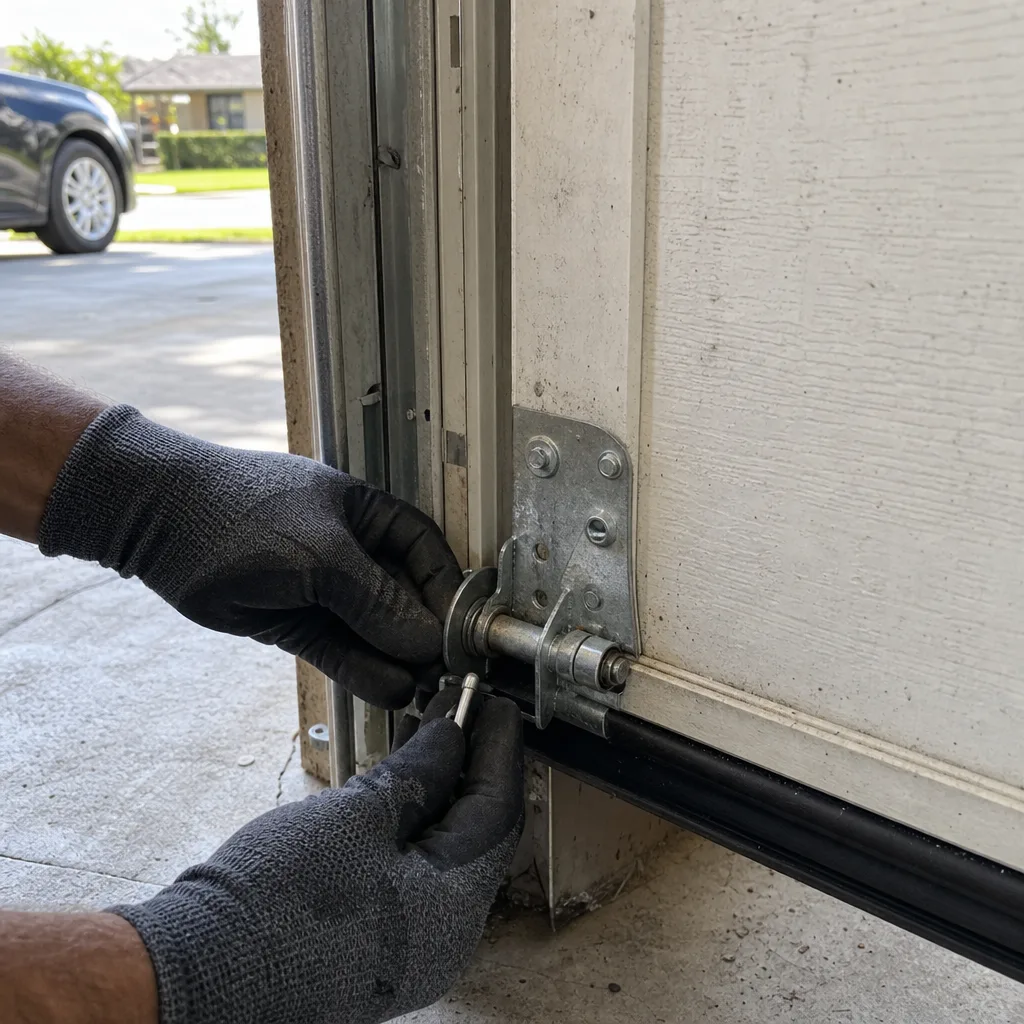
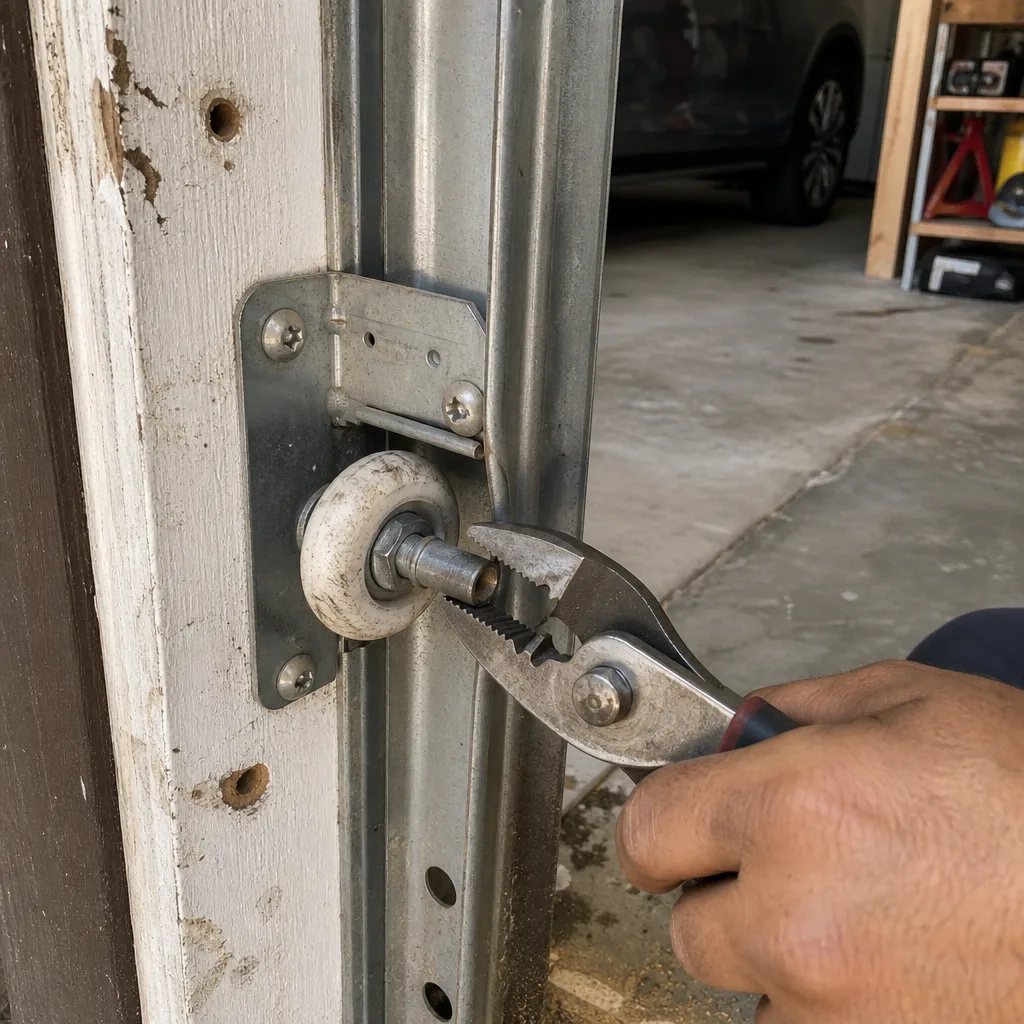
We’ve replaced doors in Davie where the previous installation failed not because the door was wrong, but because the installer used standard lags instead of the through-bolted connection the product approval specified. The door passed a visual glance and failed a wind event. Clause 4 of The Haven Standard is why we photograph the failed component before quoting a replacement. You see exactly what failed, and we document what the fix requires.
What a Product Approval Number Means and Where to Find It
Every garage door legally permitted in Davie carries a Florida Product Approval number, issued by the Florida Building Commission. This number is the state’s verification that the door model was tested to meet Florida’s wind-load and impact standards. Think of it as the door’s engineering resume. Without it, the permit application goes nowhere.
Where to find the product approval number:
- On the door’s manufacturer data plate, usually located on the bottom right or left inside corner of the door. The plate lists the model, serial number, and often the FL approval number.
- On the Florida Building Commission’s product approval database, accessible online at the Florida Department of Business and Professional Regulation website. You can search by manufacturer name, product category, or approval number.
- On the manufacturer’s specification sheet for the specific model and size. Brands like Wayne Dalton, Clopay, and Amarr publish approval documents for each configuration, because a door’s design pressure rating changes with width, height, and track type.
- In the permit application package if the door was previously permitted. The Town of Davie keeps the approved documents on file, and you or your contractor can pull them by address.
When we quote a garage door installation in Davie, we verify the product approval number for the exact size and configuration before we give you a written price. The approval number is part of the scope. You shouldn’t have to ask for it, but you should confirm it’s there on the quote before you sign anything.
One detail that matters in practice: a product approval is configuration-specific. A LiftMaster opener doesn’t need a product approval. The door does. And a door approved at 16×7 may not be approved at 18×8, because the larger surface area increases the wind load. When you see an approval number, verify it matches the door size you’re actually buying.
The Inspection Sequence: Rough-In, Installation, Final
A permitted garage door replacement in Davie follows a three-stage inspection sequence. Understanding what the inspector checks at each stage can save you a failed inspection and a re-inspection fee.
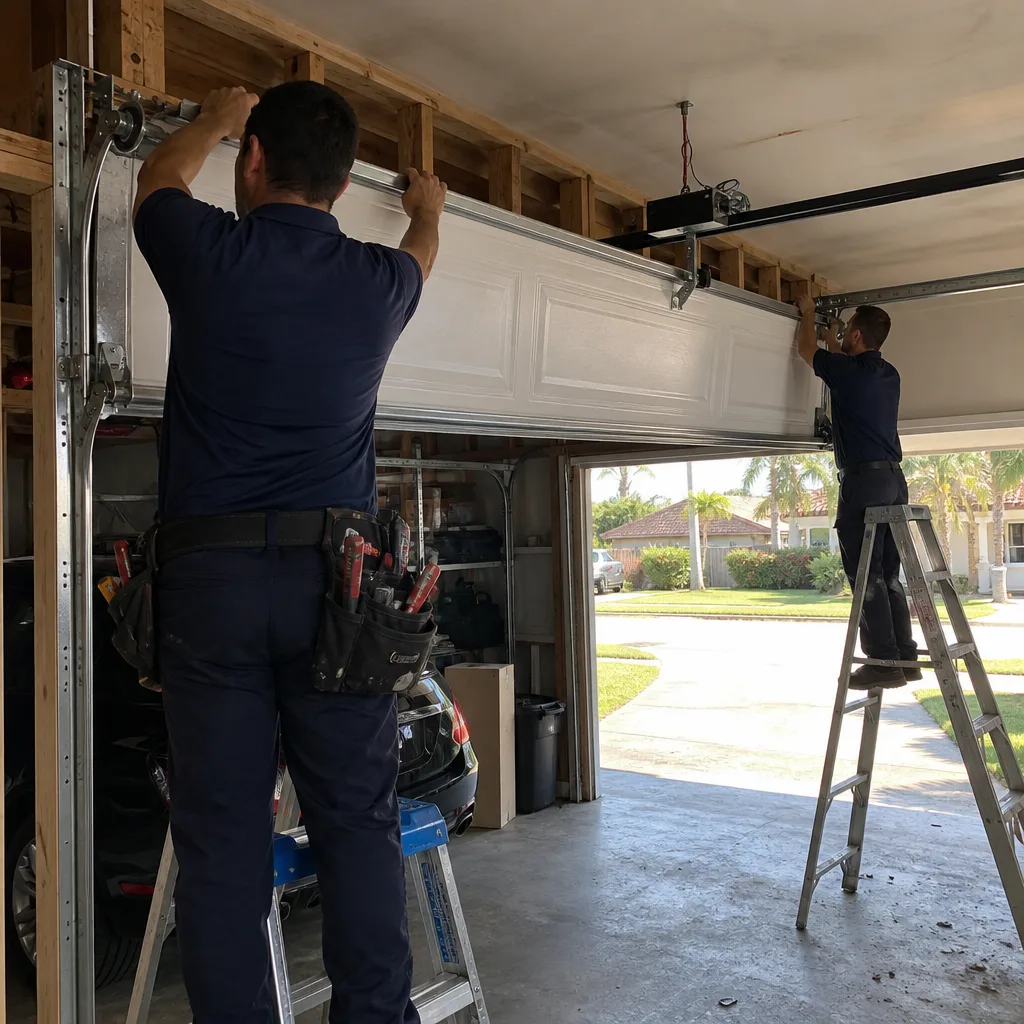
- Rough-in inspection (sometimes combined with installation). After the old door is removed and the opening is exposed, the inspector verifies the structural condition of the jambs, header, and mounting surfaces. For a direct replacement with no structural changes, Davie often merges this with the installation inspection. For any opening modification, the rough-in inspection is a separate stop. The inspector is checking that the framing meets FBC section 1609 connection requirements and that the header is adequate for the new door’s weight and wind-load path.
- Installation inspection. The door is installed, and the inspector verifies that it matches the permitted documents: same model, same size, same product approval number. They check the track mounting, the fastener type and spacing per the approved installation instructions, and the tension adjustment. They’ll also verify the emergency release mechanism works and that the door balance is correct. A door that’s too heavy or too light at rest is a code item, not just an inconvenience.
- Final inspection and permit closure. The inspector confirms all prior notes are resolved and signs off the permit. This final sign-off is what gets the permit into the Town’s permanent record. It’s the document a title search catches, and the document your insurer can pull after a storm claim.
The inspection fees are included in the permit cost, and the permit is typically pulled by the contractor, not the homeowner. If a contractor tells you they’ll do the work and you’ll handle the permit yourself, be cautious. The contractor’s name belongs on the permit as the qualifier, because they’re the ones certifying the installation. A homeowner-pulled permit with a contractor doing unpermitted work is a liability shell game nobody wins.
Marcus Deller, who owns Servo Garage Doors Davie, has handled hundreds of permitted replacements in Davie. The most common reason for a failed installation inspection is fastener spacing that doesn’t match the product approval document. It’s a five-minute fix if caught before the inspector arrives, and a full re-inspection if not. That’s why we check it against the document before we call for the inspection.
What Happens When an Unpermitted Door Is Discovered
An unpermitted garage door in Davie is a latent title defect. That’s the technical term, and it matters because it surfaces at exactly the moments you can least afford it: during a title search when you sell, during a refinance appraisal, or during an insurance claim after a storm event.
Documented patterns from Broward County show three consistent consequences:
- Insurance denial after a storm. Florida insurers, especially since the 2022 property insurance reforms, actively review permit history after wind-damage claims. If the garage door failed and the door was never permitted, or was installed with the wrong wind-load rating, the insurer can deny the garage portion of the claim. We have talked to Davie homeowners who learned this the hard way after Hurricane Ian, even though Davie is a west Broward community. The insurer doesn’t care that the storm was far away. They care that the door didn’t meet code.
- Title company red flags during sale. A title search on a Davie home sold since 2001 should include a permit search. When the title company finds a garage door replacement with no matching permit, they flag it. The seller then has to either retroactively permit the door (see the next section) or issue a credit to the buyer. Either way, it comes out of the sale proceeds.
- Code enforcement action. The Town of Davie Code Compliance Division can issue a notice of violation if they learn of an unpermitted door, typically during a neighbor complaint or a re-roof inspection. The resolution path is the same as retroactive permitting, plus a potential fine.
The permit isn’t bureaucratic theater. It’s the paper trail that proves your door meets the wind-load requirements for Davie’s design zone. That paper trail is what keeps your insurance check intact after the next named storm. Every permitted door we install at Servo’s garage door repair in Davie service area comes with that trail. The permit is part of the job, not an optional add-on.
How to Retroactively Permit a Door Already Installed
If you’ve discovered that your garage door was installed without a permit, whether through a title search or an insurance review, the fix is a retroactive permit. The process exists precisely because this situation is so common in Florida, and in Davie specifically, where the housing stock includes a lot of homes built during the 1990s and early 2000s, before permitting enforcement tightened.
Here’s the retroactive permitting process in Davie:
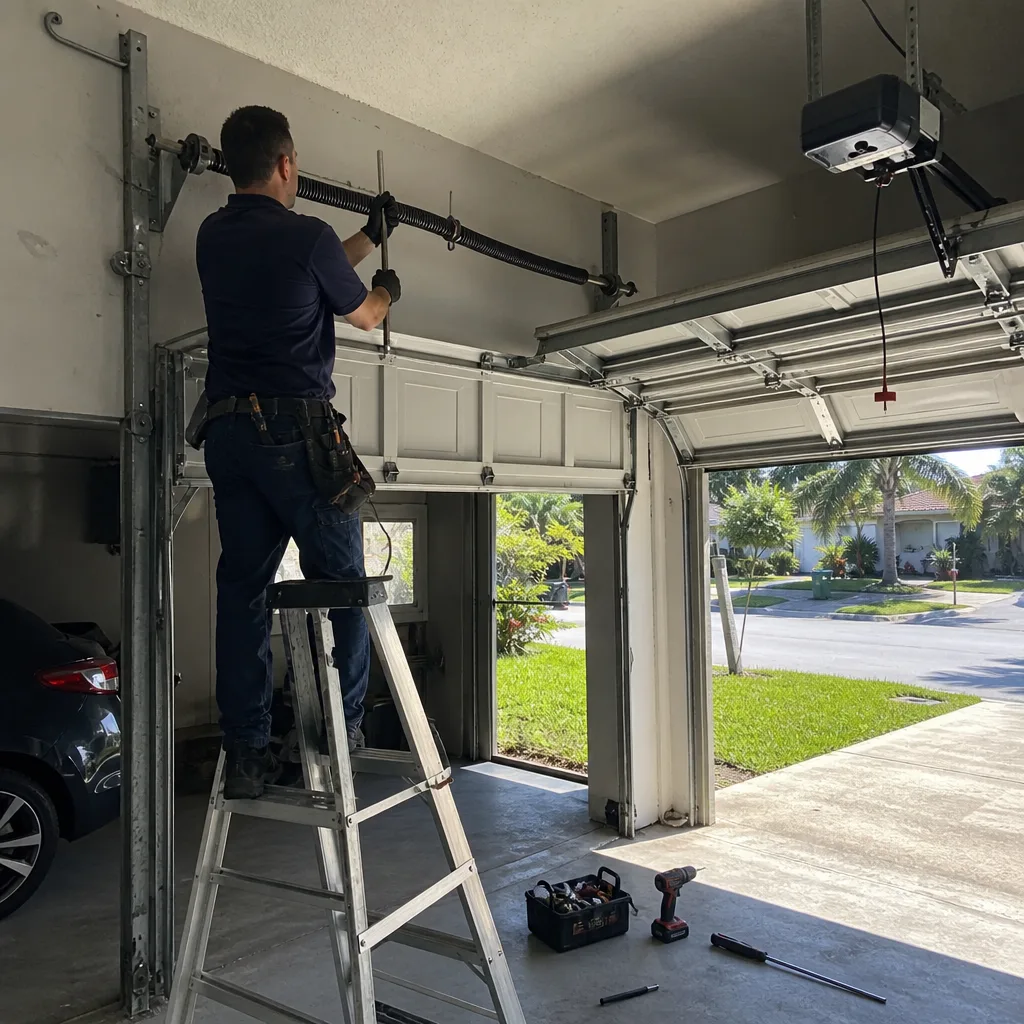
- Document what’s there. Photograph the door, the manufacturer’s data plate, the track assembly, and the mounting hardware. This documentation is the starting point for the permit application. You’re essentially rebuilding the permit file that was never created.
- Pull the product approval for the installed door. If the door has a Florida Product Approval number, the approval document is available online. If the door has no approval number, meaning it was never compliant for Florida’s wind-load requirements, the retroactive permit is likely not possible without replacing the door.
- Contact the Town of Davie Building Division. Explain the situation. They’ll tell you whether the door qualifies for retroactive permitting based on its age, condition, and product approval status. The Town’s inspectors have dealt with this many times, and the process is well-defined.
- Hire a licensed garage door contractor to perform any required corrections. The inspector may require fastener upgrades, track reinforcement, or a full door replacement if the installed door cannot be verified as compliant. The contractor’s scope is written and priced before work begins, and the corrections must pass the same inspection sequence as a new installation.
- Complete the inspection and close the permit. Once the door passes inspection, the permit is recorded, and the title defect is resolved. You’ll receive a final inspection report, and the permit is on file with the Town.
The cost range for retroactive permitting in Davie varies. The permit fee itself is typically in the $150 to $400 range, depending on the door value. If corrections are required, you’re looking at additional labor and materials, which can push the total from a few hundred dollars for minor fastener upgrades to $2,000 or more for a full door replacement if the existing door can’t be verified.
Retroactive permitting is simply not possible when the door has no product approval number and no path to verification. In that case, the only compliant fix is a new, permitted door. That’s not a scare tactic. It’s the reality of Florida’s wind-load requirements, and it’s exactly why the permit belongs on the front end of the project.
What a Permitted Garage Door Replacement Costs in Davie
The total cost of a permitted garage door replacement in Davie has three components: the door, the installation labor, and the permit with associated engineering. Here’s what you can expect, based on the Davie market in 2025:
- Standard steel garage door, 16×7, non-impact rated, with wind-load reinforcement: $1,800 to $3,200 installed and permitted. This is the most common replacement in Davie for homes where impact-rated glazing isn’t required by HOA rule.
- Impact-rated garage door, 16×7, with Florida Product Approval up to 180 mph: $4,500 to $8,000 installed and permitted. The price gap reflects the heavier construction, the reinforced track system, and the additional approval engineering. Brands like Wayne Dalton and Amarr both price in this range for Broward County.
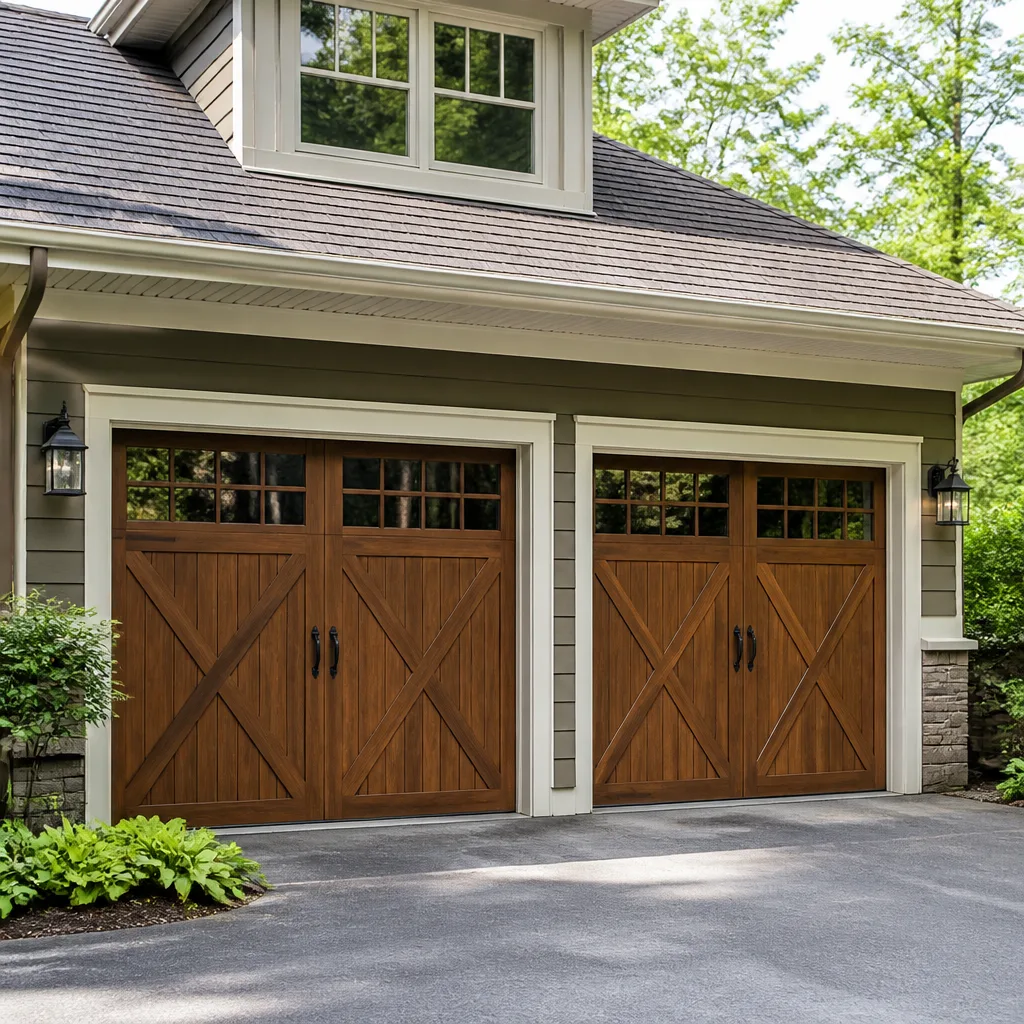
- Custom or oversized doors (18×8, carriage-style, wood-look composite): $6,000 to $14,000 installed and permitted. These projects often require an engineered header evaluation and a separate structural engineering letter, which adds $300 to $600 to the permit package.
- Permit fee: included in the quote. The Town of Davie permit fee for a garage door replacement is typically between $150 and $400, depending on valuation. We include it as a line item in the written scope. There is no “permit is extra” line buried on the back page.
The written price you receive from us includes all three components. That’s Clause 1 of The Haven Standard: a flat, written price and written scope before any work starts. The permit fee is in there. The engineering, if required, is in there. You know the total before we order the door.
If you have a written estimate from another company in Davie and you want a second set of eyes on it, we offer a Free Second Opinion. Bring the paperwork, and we’ll review the scope, the wind-load rating, and the price. No coupon, no code, no obligation.
Common Mistakes to Avoid
- Assuming “same-for-same” replacement is always permit-exempt. The phrase describes a type of work, not a blanket exemption. In Davie, the determining factor is whether the door meets the current wind-load rating and has a product approval number that the Town can verify.
- Buying a door online without checking the Florida Product Approval for Davie’s wind speed zone. A door sold nationally may not be approved for Florida at all, or may be approved for a lower wind speed than Broward County requires. The approval must list your specific design pressure.
- Letting the installer pull the permit under a different name or address. The permit must match the property address. We’ve seen cases where a contractor pulled a permit for the wrong address or used a defunct company name, and the permit was later voided.
- Skipping the final inspection because the door “works fine.” A functioning door and a code-compliant door are different things. The final inspection is what puts the permit on record. Without it, you have an open permit, which is just as bad for title purposes as no permit.
- Replacing the door without checking whether the opening itself needs repair. Rotted jambs or a sagging header won’t pass framing inspection. The right time to address them is before the new door goes in, not after the inspector flags it.
- Assuming the garage door opener is covered under the door permit. The permit covers the door and its installation. The opener is a separate item, and while it doesn’t require a permit, its safety features (auto-reverse, photo eyes) are checked during the final inspection. A non-functioning safety reverse will fail the inspection, even if the door is perfectly installed.
- Believing that hurricane-rated and impact-rated are the same thing. A wind-load-rated door is designed to resist wind pressure. An impact-rated door is designed to resist flying debris. In Davie, your door must meet the wind-load requirements. Impact rating is a higher bar and a future code discussion, but they are separate ratings with separate product approval documents.
When to Call a Professional
If your garage door was installed before 2001, if you’re planning to sell your Davie home within the next three years, or if the door has visible structural issues like twisted tracks, separated jambs, or a cracked header, call a licensed garage door contractor before you list or before the next storm season. The permit history matters, and the window to fix it cheaply is before a problem surfaces in a transaction.
If you’re not sure whether your current door is compliant, or you have an installation quote that doesn’t include a line item for the permit, that’s a conversation worth having. Servo’s garage door opener repair and installation in Davie team can check the existing permit record and tell you in one visit whether the door is compliant, permitted, and wind-load-rated for Davie’s design zone. Servo Garage Doors Davie offers free estimates in Davie, call (754) 704-3976.
Frequently Asked Questions
Yes, in most cases. A replacement garage door in Davie requires a building permit when the door size changes, when the opening is modified, or when the existing door lacks a verified product approval. Same-size replacements on already-permitted doors may fall under repair scope, but you should confirm with the Town of Davie Building Division before starting work. Call (754) 704-3976 for a free compliance check on your current door.
The Town of Davie permit fee for a garage door replacement typically ranges from $150 to $400, depending on the project valuation. Engineering letters, if required for custom openings, add $300 to $600. The permit fee should be included in your contractor’s written quote. Call (754) 704-3976 for a flat, written price that includes the permit.
Davie’s wind speed design zone under Florida Building Code Section 1609 requires a minimum design pressure rating that varies by door size, typically +24.0/-24.0 psf or higher for a standard 16×7 door. The exact required rating is determined by your parcel’s wind speed contour and the door dimensions. The door must carry a Florida Product Approval number that lists the applicable wind speed.
You can, but the title company will likely flag the unpermitted door during the title search, and the buyer will demand either a retroactive permit or a credit. The retroactive permitting process adds time and cost, and if the door can’t be verified as compliant, the only fix is a replacement. It’s cheaper to permit the door correctly the first time.
A wind-rated door is engineered to resist the wind pressure of a named storm. An impact-rated door is engineered to resist flying debris, which is a separate test and a higher standard. Davie requires wind-load compliance under FBC 1609. Impact rating may be required later as the code evolves, but they are separate product approval categories.
Florida law allows a homeowner to act as their own contractor on their primary residence, including pulling the permit. However, the permit application still requires product approval documentation, wind-load calculations, and passing the same inspection sequence. If the door fails inspection, you’re responsible for the corrections. Most Davie homeowners find the complexity and safety liability of torsion spring work makes a licensed contractor the practical choice. High-tension springs can cause serious injury if mishandled. Call (754) 704-3976 for a free estimate on a permitted replacement.
Once the permit application with product approval is submitted, Davie’s review typically takes 3 to 7 business days for a simple replacement. The inspections are scheduled after installation and usually occur within 1 to 3 business days of the request. Total time from permit application to closed permit averages two to three weeks.
The Bottom Line
A garage door in Davie is a structural opening protection device, not a cosmetic accessory. The permit, the product approval number, and the final inspection are what legally prove the door meets Florida Building Code Section 1609 wind-load requirements. Skip the permit and you save a few hundred dollars today, then risk a denied insurance claim after the next named storm or a title defect that surfaces at sale. Do it correctly the first time: pull the permit, verify the product approval for Davie’s wind speed zone, pass the inspection, and keep the paper trail. The alternative is a retrofit permit or a full replacement at the worst possible moment. If you want a written price that includes the permit, the engineering, and the documentation, call (754) 704-3976, or browse more guides & resources on garage door compliance and maintenance. The estimate is free, and the paper trail is part of the job.
Written by Marcus Deller, Owner at Servo Garage Doors Davie, serving Davie since 2015.