
Last updated September 20, 2026
 Before
 After
After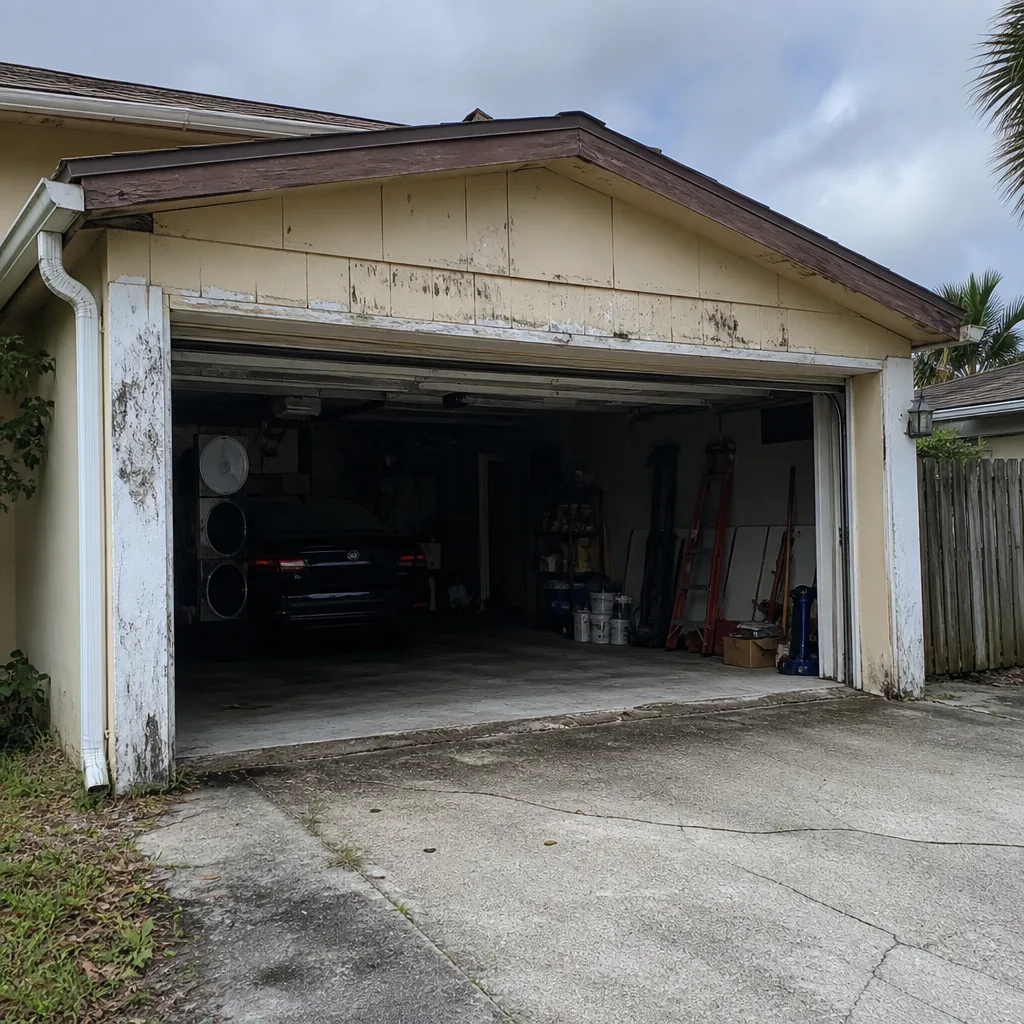 Before
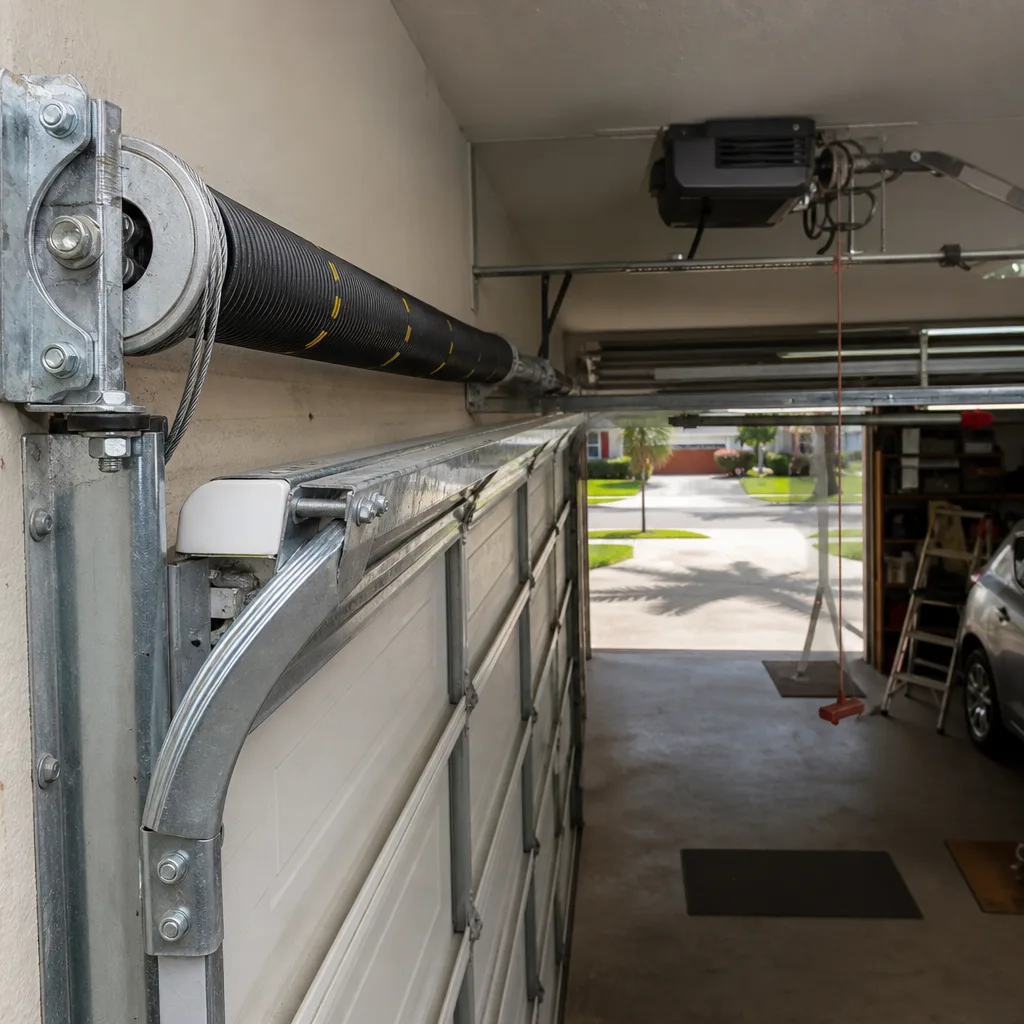 After
After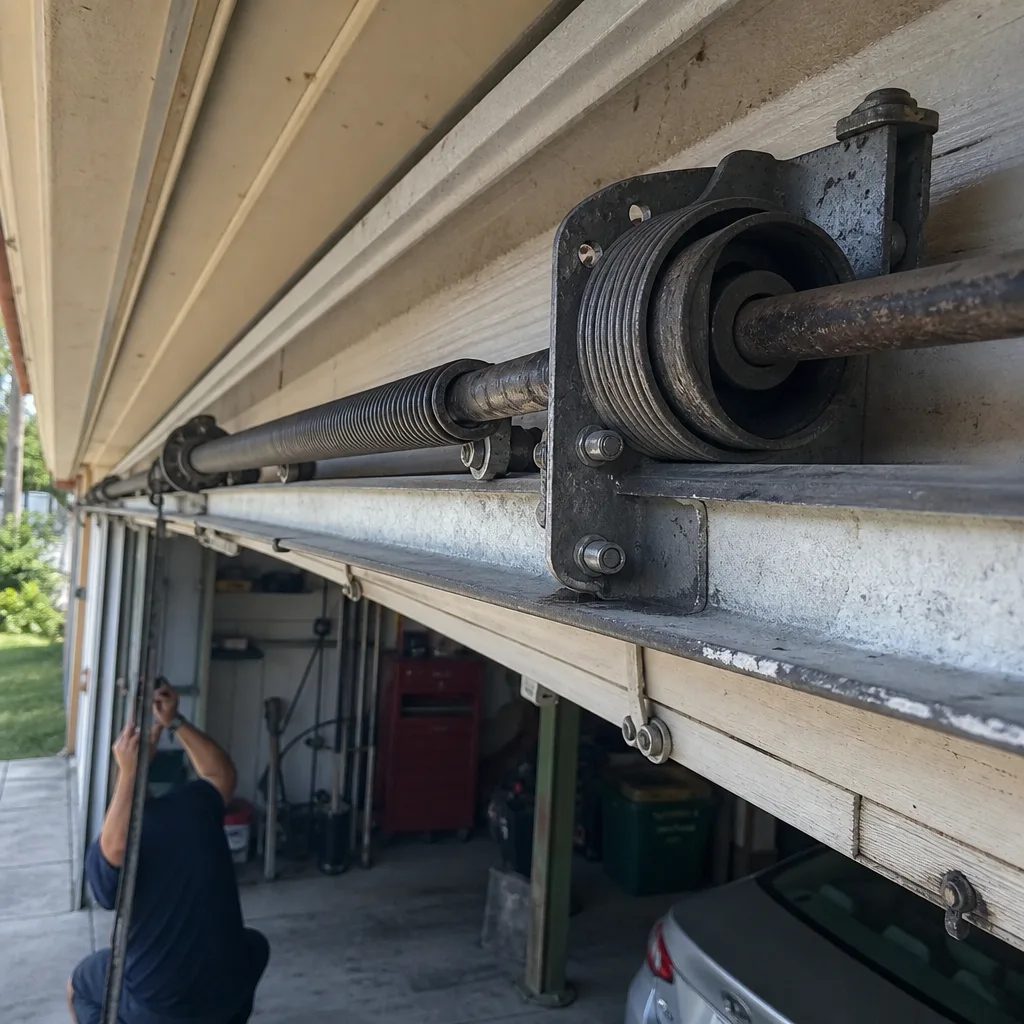 Before
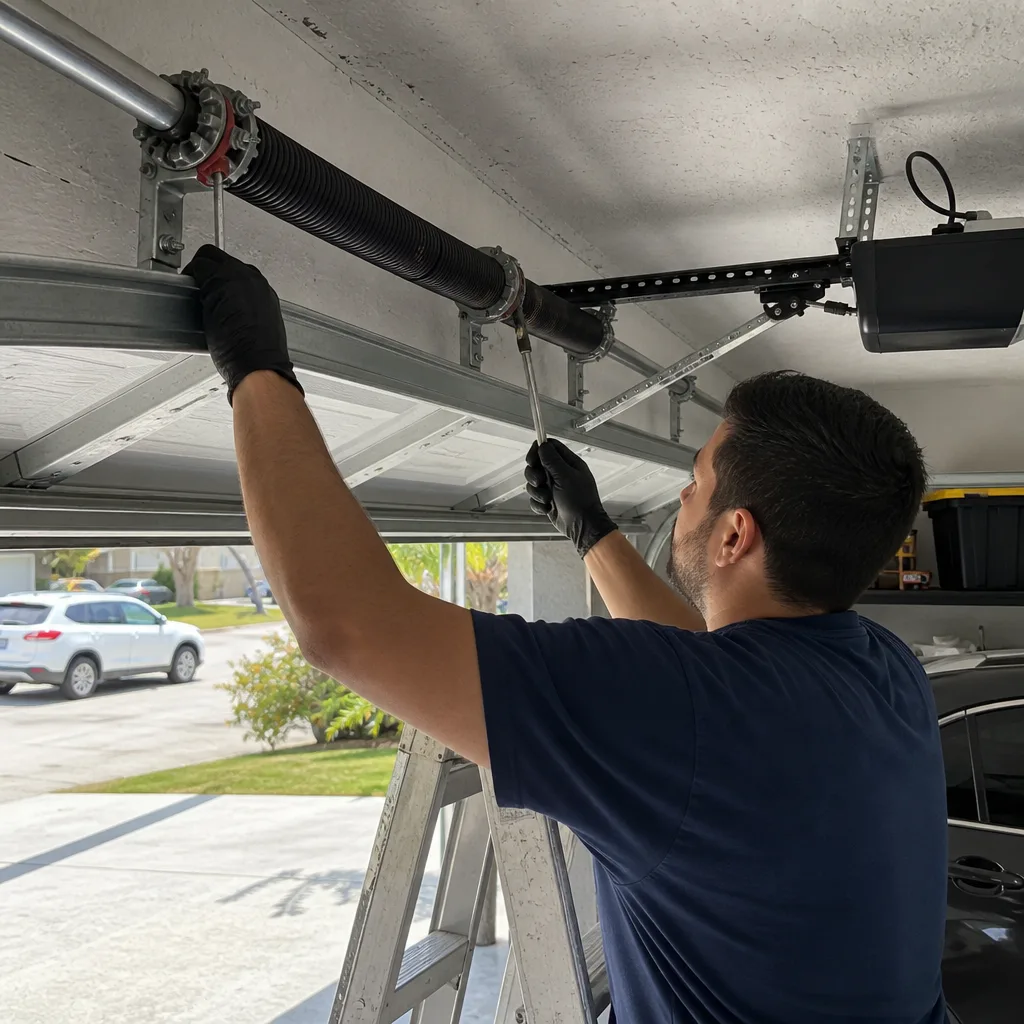 After
AfterTable of Contents
- Why Davie Salt Air Changes the Maintenance Schedule
- Spring Inspection: What Pass/Fail Actually Looks Like
- Cable and Bracket Inspection: The 15-Minute Check That Prevents a 2 AM Failure
- Auto-Reverse Testing: The FTC Penny-Gap Standard
- Lubrication Spec: What Gets Lithium Grease, What Gets Silicone, What Gets Nothing
- Rollers, Hinges, and Track Alignment
- The Documentation Habit: Photographing Components on a Fixed Schedule
- Davie Seasonal Schedule: What to Do in May and November
Why Davie Salt Air Changes the Maintenance Schedule
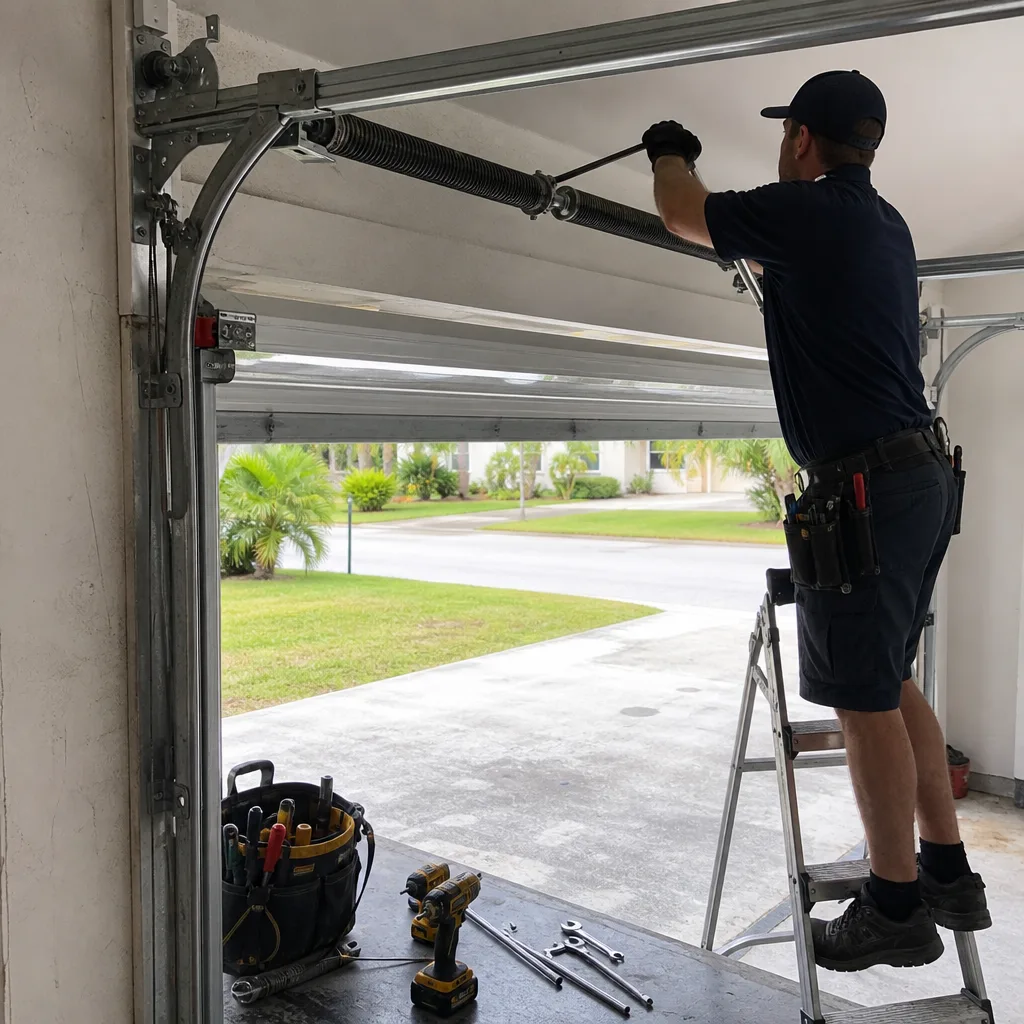
Davie sits roughly 8 miles from the Atlantic. That is close enough for airborne salt to settle on metal surfaces, and garage door hardware is no exception. We have replaced springs in western Davie neighborhoods like Shenandoah and Forest Ridge that showed surface corrosion at the 5-year mark, while identical springs in interior Florida locations lasted the full decade-learn to spot early trouble in our Garage Door Warning Signs: A Davie Homeowner’s Reference Guide. The corrosion does not have to be dramatic to matter. Pitting on a torsion spring coil creates a stress concentration point. The spring does not weaken evenly; it develops a single weak spot that eventually becomes a clean break.
This is the maintenance reality for Davie homeowners: the standard manufacturer-recommended annual inspection assumes a neutral climate. You do not have a neutral climate. You have coastal air, summer humidity that stays above 70 percent for months, and a rainy season that runs from May through October. We recommend a six-month inspection interval. That means twice a year, not once. One pass in May, before the humidity peaks. One pass in November, after the rainy season ends and before the dry winter months settle in.
What the Six-Month Interval Buys You
- Early pitting detection: Surface rust is manageable. Deep pitting is a replacement signal. Catching it early gives you a predictable replacement window instead of an emergency call.
- Cable fray detection before strands snap: A cable with three broken strands is a $85 repair. A cable that snaps under tension is a falling door and a potential injury.
- Roller wear documentation: Nylon rollers wear gradually. Photographing them every six months gives you a baseline so you can see the degradation.
If you want a deeper look at what repair work in Davie actually involves, our Garage Door Repair in Davie page covers the common failure patterns we see across Broward County.
Spring Inspection: What Pass/Fail Actually Looks Like
Most checklists say “inspect springs for wear.” That instruction is worthless without a definition of wear. Here is the specific pass/fail standard we use on every service call in Davie.
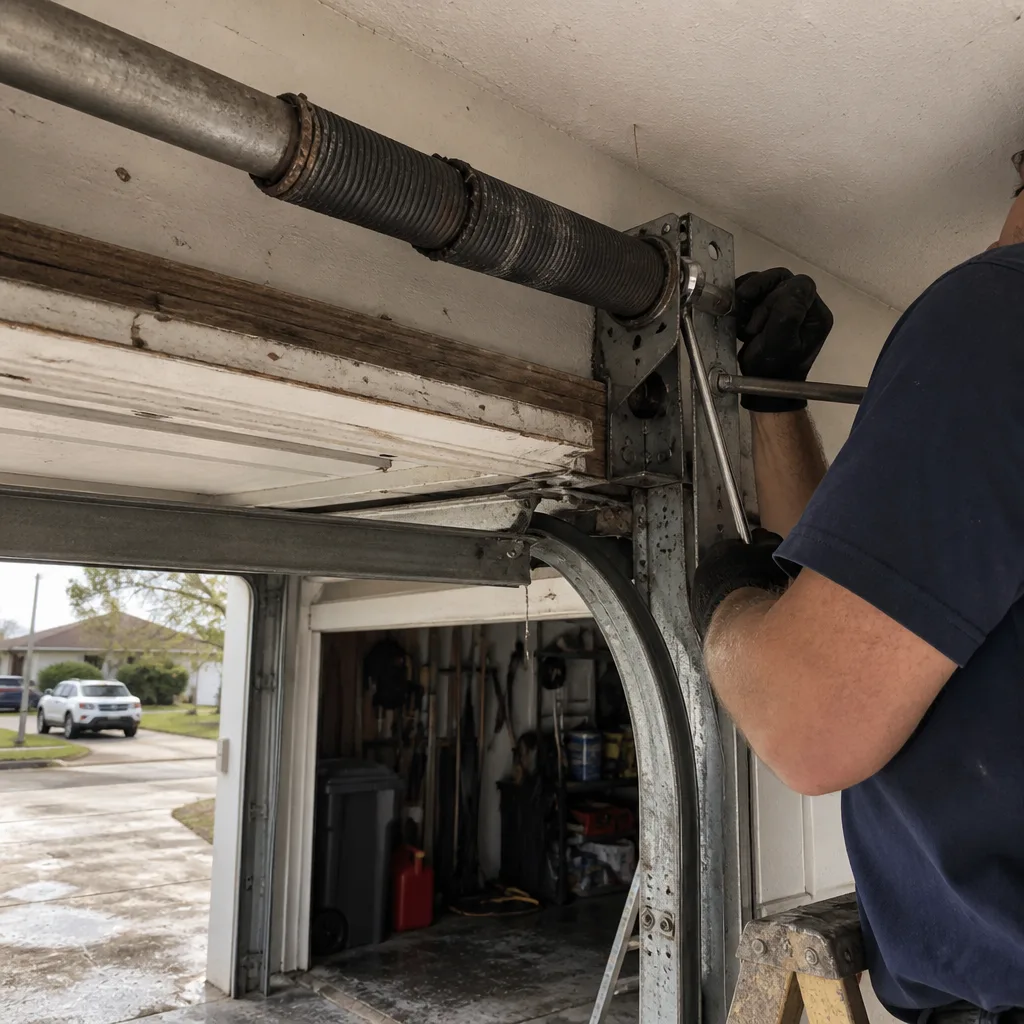
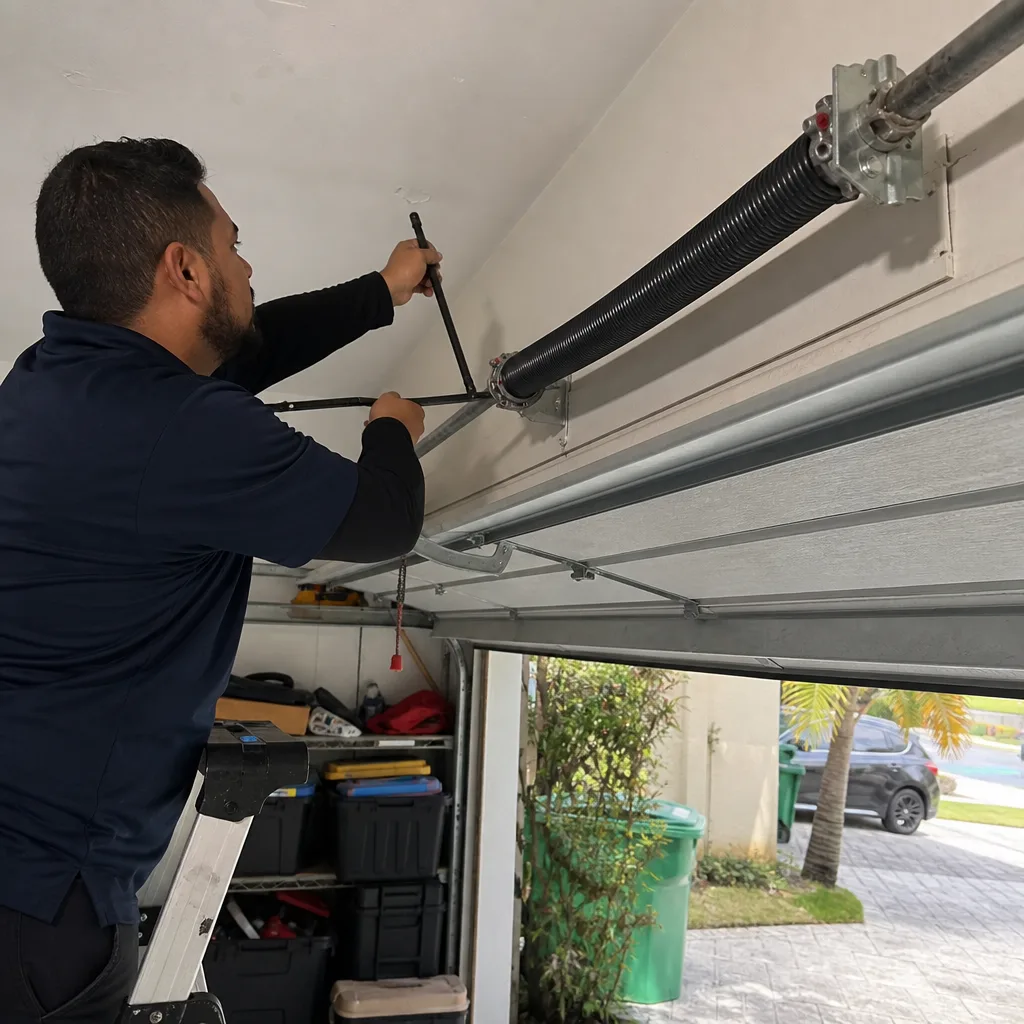
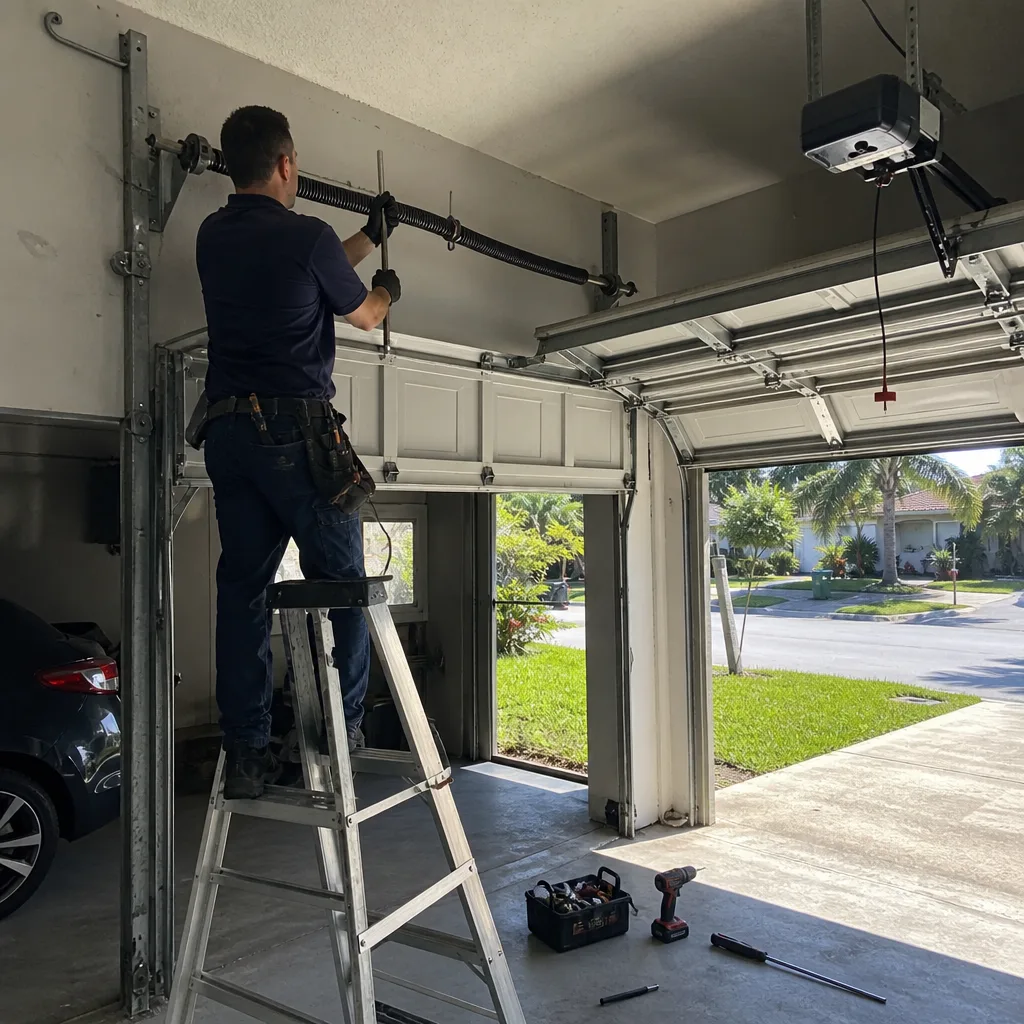
Pass: The spring coil surface is uniform in color, with no visible flaking, scaling, or reddish-brown discoloration. The coil gap is consistent along the full length. When the door is closed, the spring is under tension but quiet. No gaps between coils that vary by more than 1/16 inch.
Fail: Any of the following conditions:
- Visible rust scaling or flaking on the coil surface. Surface discoloration alone is not a fail. Flaking is.
- Pitting that catches a fingernail when dragged across the coil. This means the corrosion has penetrated below the surface.
- A visible gap in the coil where the spring has already separated. This is the break point. The door is not safe to operate manually or with the opener.
- Coil gaps that vary along the length, indicating the spring is deforming unevenly.
Consequence of ignoring: A torsion spring breaks when the door is down in about 70 percent of cases. When that happens, the spring releases its stored energy instantly. The door becomes a dead weight of 150 to 300 pounds. If your opener tries to lift it, you will burn out the motor. If the cable brackets are also corroded, the door can drop.
Safety note: Torsion springs are under constant tension, even when the door is closed. Do not attempt to remove, adjust, or replace a torsion spring yourself. The winding bars and spring tension involved can cause serious injury. Inspection is visual; replacement is for a trained professional.
We name the price range before any work starts. That is Clause 1 of The Haven Standard, and it applies to every spring replacement we do in Davie. You will see the written scope and the dollar figure before a wrench touches the door.
Cable and Bracket Inspection: The 15-Minute Check That Prevents a 2 AM Failure
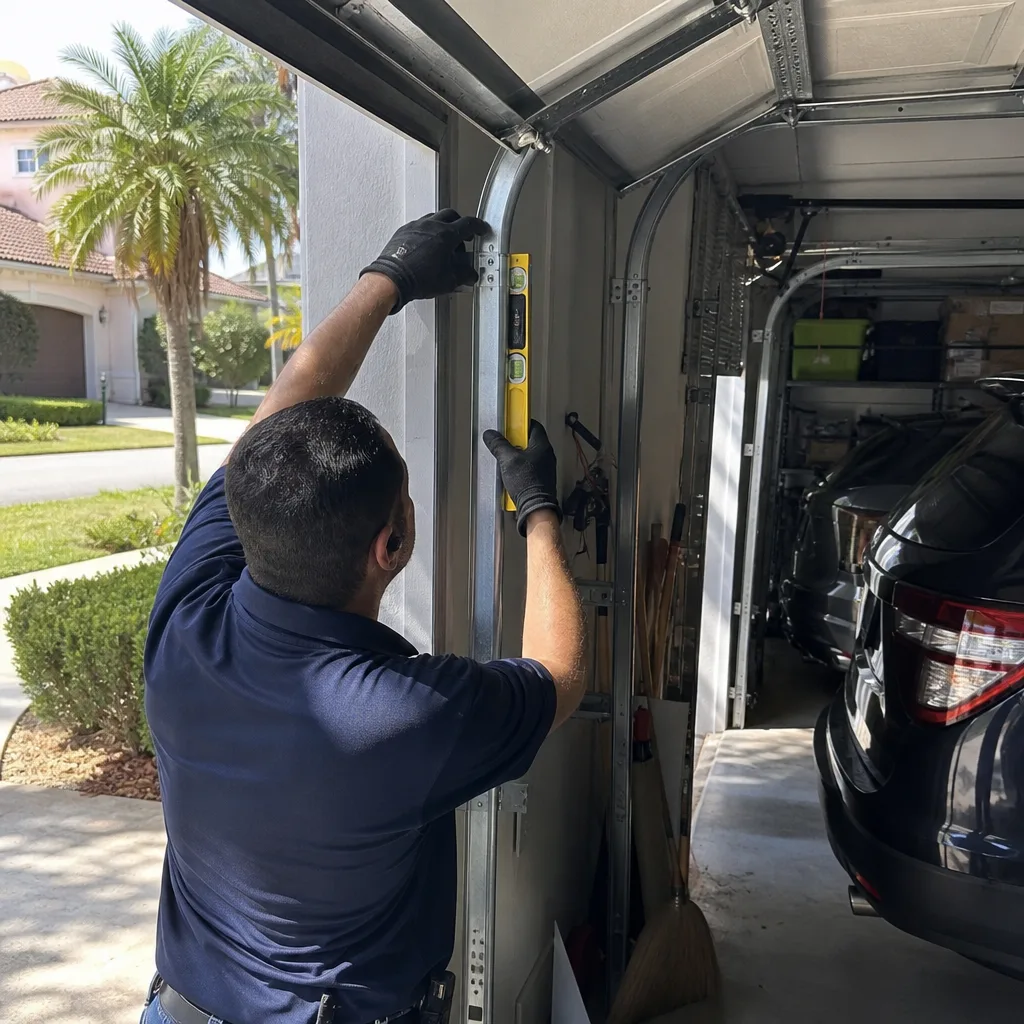
Cables are the most under-inspected component on a residential garage door, and in Davie they are also the most corrosion-vulnerable. The cable is a wound steel wire that runs from the bottom bracket up to the drum at the top of the door. It carries the door’s weight alongside the spring. When the spring breaks, the cable is what catches the door if it is in good condition. When the cable breaks, there is nothing left to catch it.
The Specific Pass/Fail Standard
- Pass: Cable is uniformly smooth, with no broken strands visible along its full travel. The cable sits cleanly in the drum groove. The bottom bracket shows no more than light surface oxidation and moves no more than 1/8 inch when the door is operated.
- Fail: Any broken strand, any fraying where the cable meets the drum, any kink or deformation in the cable run, or any bottom bracket with visible rust scaling or movement greater than 1/8 inch.
Consequence of ignoring: A cable that fails under tension drops the corner of the door it was supporting. That corner falls first, twisting the door in the track, bending panels, and pulling the other cable with it. The repair bill goes from a simple cable replacement to a panel replacement and possibly a full Garage Door Installation in Davie.
In our experience, cable failures in Davie cluster in two places: homes within 3 miles of the coast where salt exposure is highest, and homes where the door sits in direct afternoon sun, which accelerates the heat-cycling that weakens the cable strands at the drum connection point.
Auto-Reverse Testing: The FTC Penny-Gap Standard
The auto-reverse function on your garage door opener is a federally mandated safety system with a specific test standard. The U.S. Consumer Product Safety Commission requires that every garage door opener manufactured after 1993 reverse when it encounters resistance equivalent to a 1.5-inch-high object on the floor. The test uses a 2×4 board laid flat, but the penny-gap method is the quickest way to check that the opener’s force settings are in the right range.
Step-by-Step: The FTC Penny-Gap Auto-Reverse Test
- Close the door completely using the opener.
- Place a single penny (about 1.5 mm thick) on the floor directly under the center of the door’s leading edge.
- Press the opener button to close the door.
- Watch the door’s leading edge as it reaches the penny. A properly adjusted opener will reverse within 2 seconds of contact with the penny.
- If the door crushes the penny and does not reverse, the force setting is too high. This is a fail.
Consequence of ignoring: An auto-reverse that fails its test means the door can close on a person, pet, or object without stopping. This is the single most important safety test you can perform, and it takes less than two minutes. Every opener on the market including LiftMaster, Chamberlain, and Genie units has adjustable force settings, but those settings drift over time as the door’s weight changes with spring wear and roller degradation.
Travel limit check: The travel limit controls how far the door travels down before the opener considers it closed. If the limit is set too low, the door stops before it seals against the ground, leaving a gap. Set too high, the door presses into the ground and the opener strains every cycle. The test: with the door closed, place a piece of paper between the bottom seal and the floor. You should feel light resistance when you pull it out, not a firm grip and not free movement.
If your opener fails either test or you need a new unit, our Garage Door Opener Repair & Installation in Davie page covers the brands we service and the written-price policy on every opener job.
Lubrication Spec: What Gets Lithium Grease, What Gets Silicone, What Gets Nothing
Garage door lubrication is where most homeowner maintenance goes wrong, and the mistakes are usually well-intentioned. The wrong lubricant attracts dust, gums up moving parts, and shortens component life. Here is the exact specification we use on service calls in Davie.
The Lubrication Table
- Torsion spring coils: White lithium grease or a dedicated garage door spring lubricant, applied lightly along the full length of the coil. The goal is a thin film on the coil surface to slow corrosion. Do not saturate; a heavy application drips and attracts dirt. Frequency: every 6 months.
- Steel rollers with ball bearings: White lithium grease, applied to the bearing housing only. Do not lubricate the wheel surface that rides on the track.
- Nylon rollers with sealed bearings: Nothing. These rollers from brands like Clopay and Amarr have sealed bearings that are factory-lubricated. Adding lithium grease or silicone breaks down the nylon over time. If a nylon roller is noisy, it means the bearing is worn, and the correct fix is replacement, not lubrication.
- Hinges and pivot points: White lithium grease, one small dab per hinge pin. Wipe away excess after application.
- Track (vertical and horizontal sections): Nothing. The track is a guide surface, not a lubrication surface. Adding grease or oil to the track makes the rollers slip, which causes uneven door travel and premature roller wear.
- Weatherstripping and bottom seal: Silicone spray, applied sparingly and wiped dry. Silicone keeps the rubber flexible, which matters in Davie where heat cycles harden rubber seals. Do not use petroleum-based products on rubber; they cause swelling and cracking.
- Lubricate the opener chain or belt (if applicable): Chain-drive openers get a light lithium grease on the chain. Belt-drive openers get nothing; the belt is fiberglass-reinforced and self-lubricating.
Consequence of wrong lubrication: Grease on the track means the rollers skate instead of roll, which creates flat spots on steel rollers and wear on the track. Grease on nylon rollers degrades the nylon. A can of WD-40 used as lubricant washes out existing grease and leaves bare metal exposed to Davie’s salt air. Use the right product or use nothing.
Rollers, Hinges, and Track Alignment
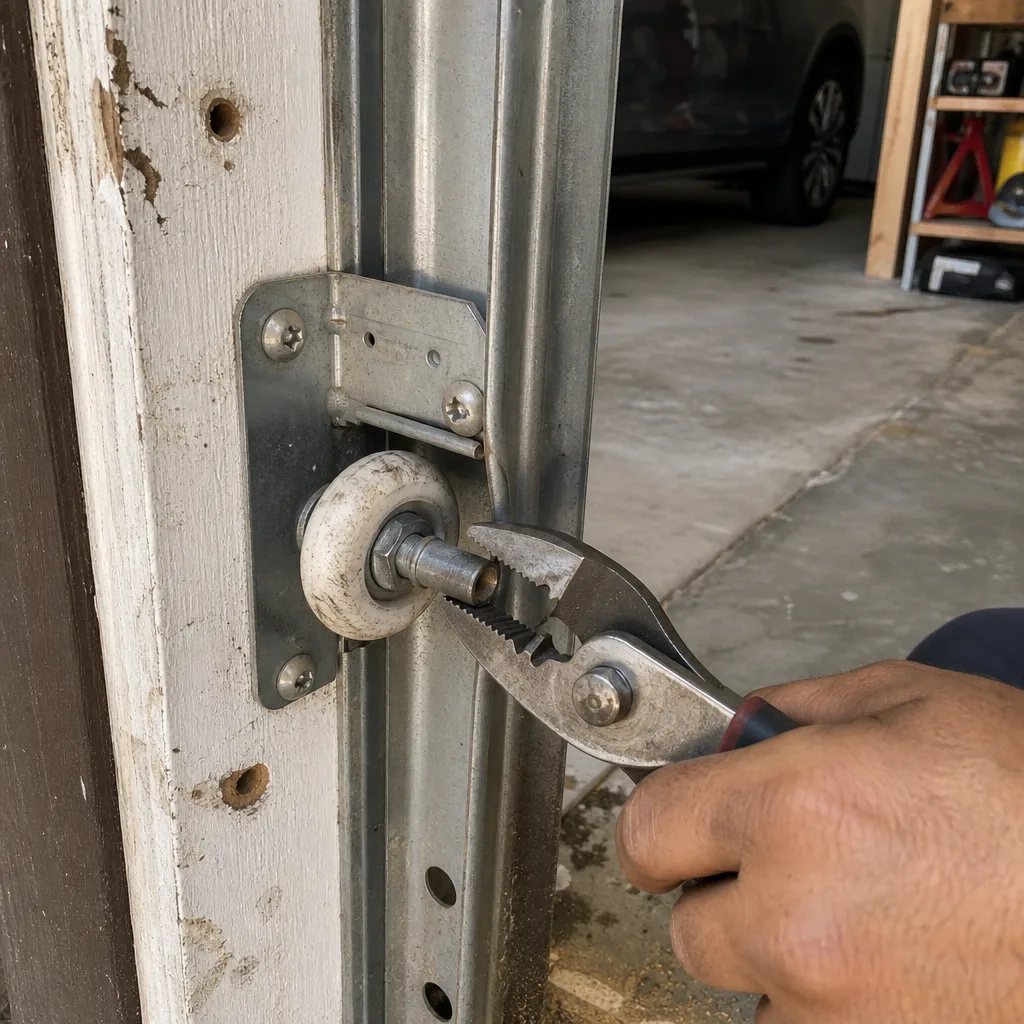
Rollers are the component most Davie homeowners ignore until they hear a grinding noise. The rollers carry the door’s weight through the vertical and horizontal track sections. There are two types: steel rollers with exposed ball bearings and nylon rollers with sealed bearings. Most doors installed after 2015 in Davie use nylon rollers from the factory, and most builders install the cheapest nylon roller available, which carries a 5-to-7-year service life in this climate.
Roller Pass/Fail Standard
- Pass: Roller spins freely with no lateral wobble greater than 1/16 inch. The wheel surface is smooth with no flat spots, cracks, or visible wear patterns. No grinding noise when the door operates.
- Fail: Any wobble greater than 1/16 inch, any wheel crack, any flat spot, or any grinding sound. A roller that has seized and slides on the track instead of spinning is also a fail.
Consequence of ignoring: A seized roller drags on the track, which causes uneven door movement, which places uneven load on the spring, which shortens spring life. A roller that breaks mid-travel can jam the door in the track and pull the cable off the drum.
Hinge and Track Alignment Check
- Hinges: Open the door to half height and look at each hinge from the inside. No visible cracks, no loose screws, no sagging. Tighten any screw that turns with light finger pressure.
- Track alignment: The vertical track sections should be plumb (straight up and down) and the horizontal tracks should be level or have a slight upward pitch toward the rear. Check the track brackets where they attach to the wall; loose brackets allow the track to flex, which compounds roller wear.
- Consequence of ignoring: A loose track bracket lets the track drift, which changes the roller angle, which accelerates wear on every moving part. We have seen doors in Davie where a single loose bracket was the root cause of a three-part failure: roller, hinge, and cable, in that order.
The Documentation Habit: Photographing Components on a Fixed Schedule
Here is the habit that separates Davie homeowners who catch problems early from those who discover them at the worst possible time: photograph your garage door components on a fixed schedule. Twice a year, when you do your maintenance pass, take 30 seconds to photograph the spring, the cable ends, the bottom brackets, and the rollers. Store the photos in a folder on your phone labeled with the date.
Why this matters: when something fails, you will have a baseline. You will know what the spring looked like six months ago. You will know whether the cable end was already showing a broken strand at the last inspection. You will have evidence of what changed, and that evidence helps you make a faster decision about repair versus replacement.
This is the same principle that drives our Servo Garage Doors Davie home service model. Clause 4 of The Haven Standard states that we photograph the failed component before quoting a replacement. You see the evidence before you spend a dollar. We did not invent that idea as a marketing gimmick; we built the company on it in 2015 because we were tired of an industry where “your spring is bad” was the entire explanation. A spring that measured at 0.25-inch wire diameter and shows a clean break at the coil tells a story the word “bad” cannot.
What to Photograph and When
- Springs (May and November): Full-length photo of each spring, close enough to see the coil surface. This records corrosion progression year over year.
- Cable ends (May and November): Photo of each cable where it connects to the bottom bracket and where it enters the drum.
- Bottom brackets (May and November): Photo of each bracket from the inside, showing rust level and fastener condition.
- Rollers (November): One photo per roller, or at minimum the top and bottom roller on each side.
- Opener unit (November): Photo of the opener’s model number label and the date of the last force-setting check.
This takes five minutes total. The documentation habit is one of the three or four highest-leverage maintenance actions you can take, and it costs nothing.
Davie Seasonal Schedule: What to Do in May and November
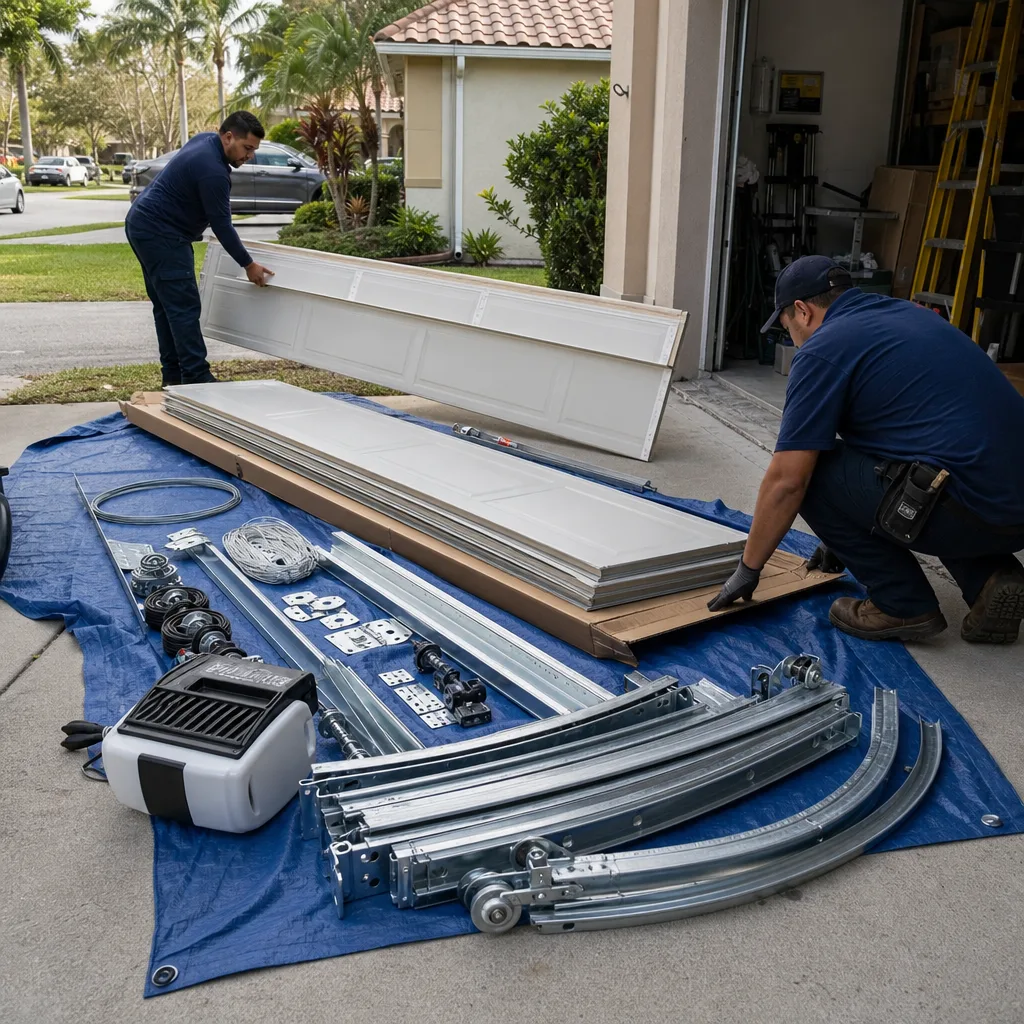
Davie has two seasons: humid and less humid. The maintenance schedule follows that split. May is the pre-humidity pass. November is the post-rainy-season pass. Each pass has a different emphasis.
May: The Corrosion-Prevention Pass
- Inspect and photograph springs, cables, and brackets. Look for rust progression from the dry winter months.
- Apply white lithium grease to the spring coils. This is the most important lubrication of the year because the summer humidity accelerates corrosion without the grease film.
- Check the bottom seal for wear. Summer rains mean standing water at the door bottom if the seal is cracked.
- Run the auto-reverse penny-gap test. Heat expansion can shift force settings slightly.
- Lubricate hinges with one dab of lithium grease each.
November: The Post-Rainy-Season Pass
- Inspect and photograph all components. Compare against May photos. Look for changes.
- Check the bottom seal for water damage, mildew, or hardening from the summer heat.
- Run the auto-reverse test and the travel-limit paper test.
- Wipe down the spring coils with a dry cloth and reapply a light lithium grease film.
- Check track brackets for loosening after a summer of thermal expansion and contraction.
- Inspect the opener chain or belt tension. Chains stretch slightly; belts do not.
Following this twice-yearly schedule in Davie means you are checking high-wear components every six months, applying the right lubricants in the right places, and building a documentation record that makes any future repair discussion concrete instead of speculative.
When to Call a Professional
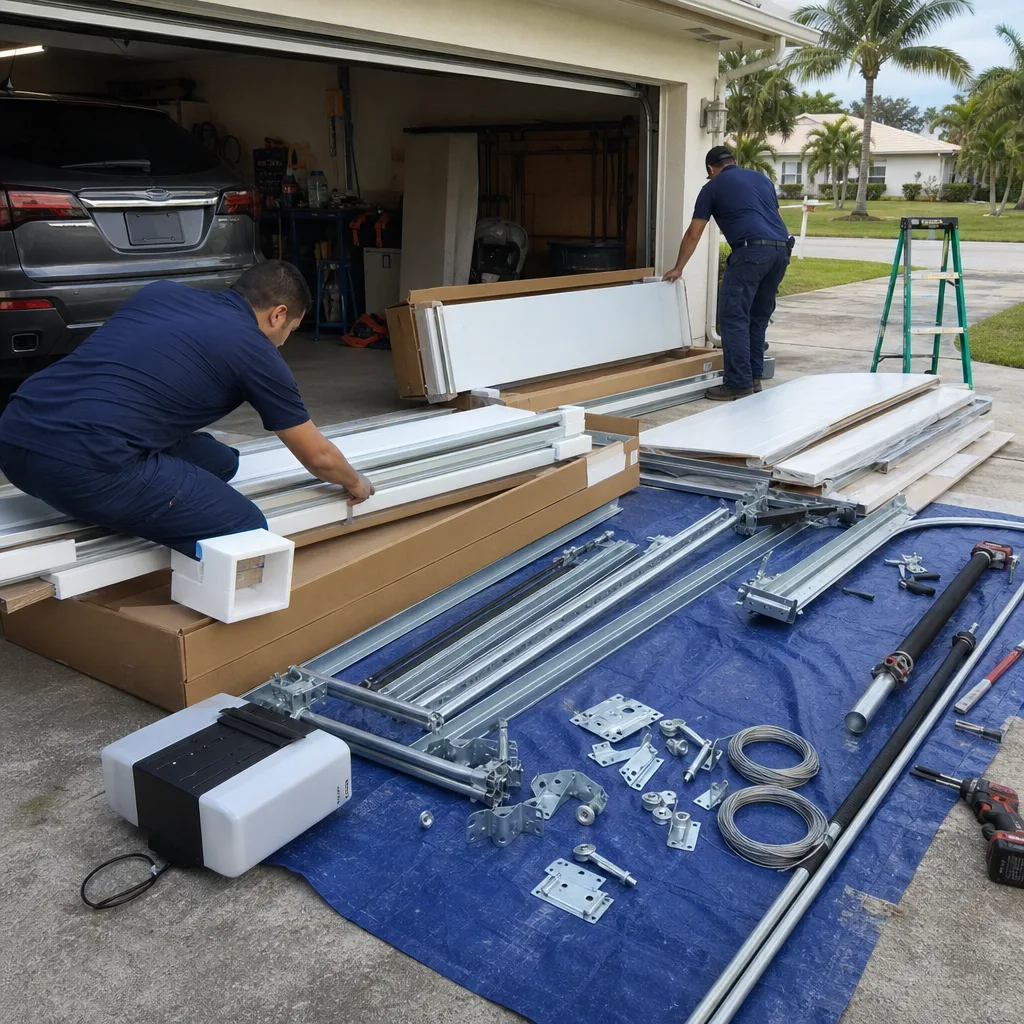
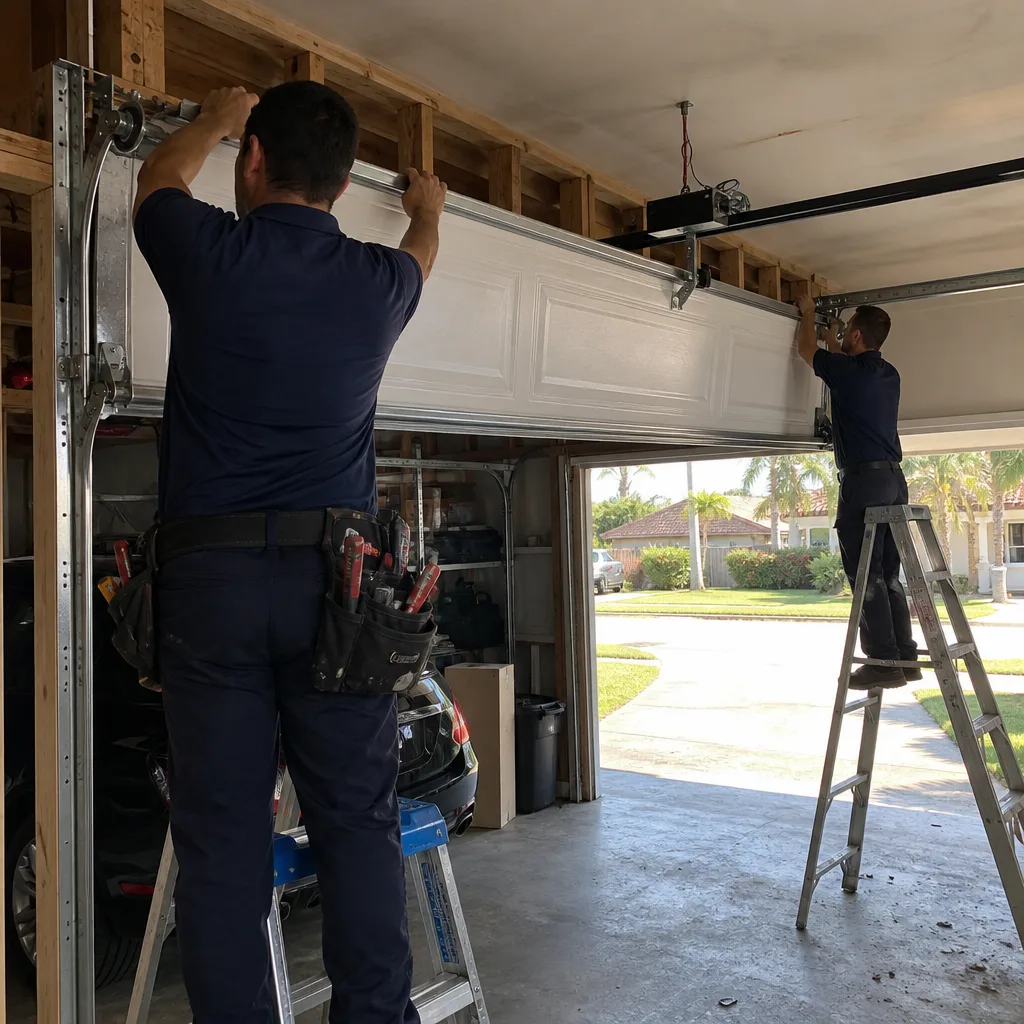
Some items on this checklist are inspection tasks you can do yourself. Some are not. Call a professional if you see a broken spring, a frayed cable with visible broken strands, a bottom bracket that moves more than 1/8 inch, or an opener that fails the penny-gap auto-reverse test after you have checked the settings; see How to Hire a Garage Door Contractor in Davie: A Step-by-Step Guide for help choosing the right technician. These are not nuisance items; they are safety failures. A broken torsion spring means the door’s weight is unmanaged. A frayed cable means the backup system is compromised. A failed auto-reverse means the door can close on someone.
We offer free estimates in Davie. Call (754) 704-3976. Every estimate includes a written price and a written scope before any work starts. You will also receive a documented photo record of what we found and what we did. If you have a written estimate from another company, bring it; we offer a free second opinion with no coupon required.
The Bottom Line
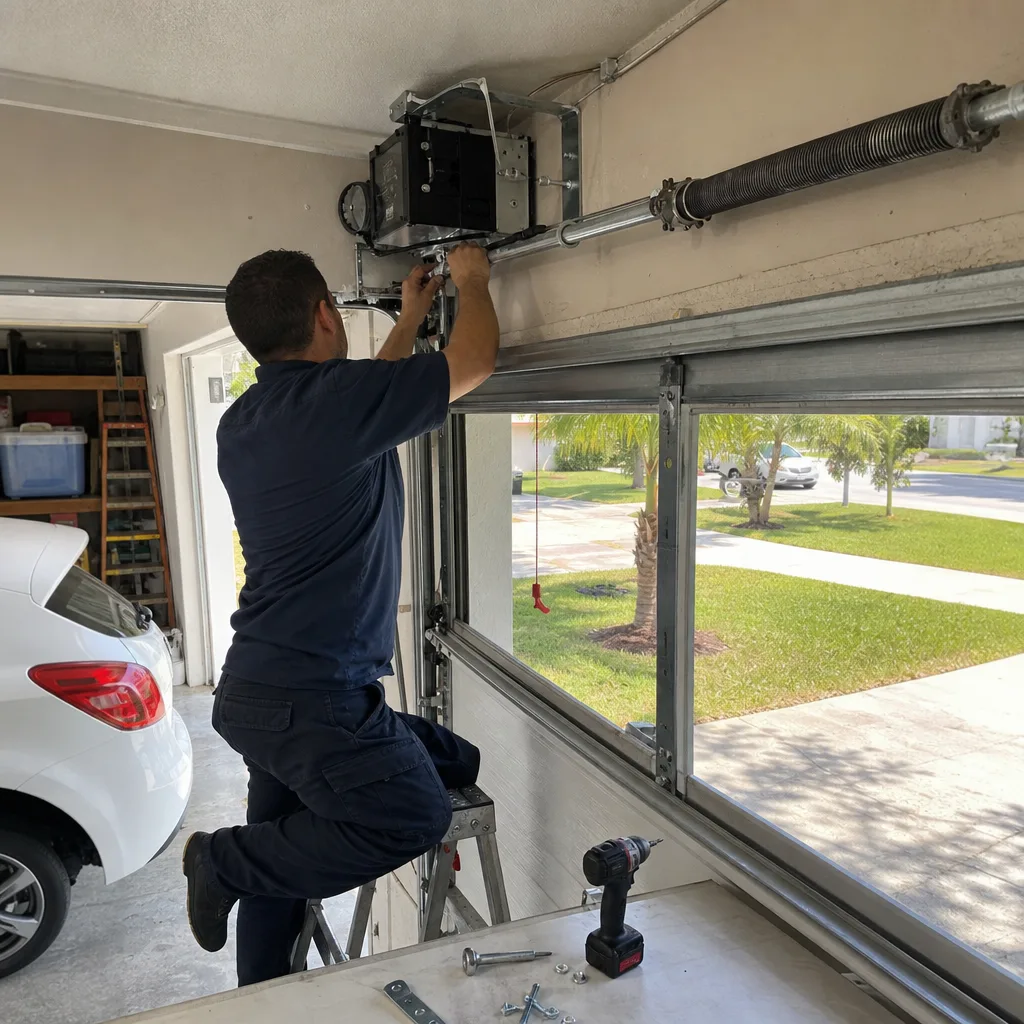
A garage door maintenance checklist only works if it names the specific test, the pass/fail threshold, and the consequence of ignoring each item. For more guides & resources on keeping your door running, explore our blog. This one does all three for Davie’s coastal climate. Run the six-month schedule: May and November. Inspect springs for pitting and separation. Inspect cables for broken strands and bracket movement. Test auto-reverse with the penny-gap standard. Lubricate the right parts with the right products and leave the wrong parts alone. Photograph everything. The documentation habit is the difference between discovering a problem early and discovering it when the door will not open and the spring is in two pieces on the floor.
Written by Marcus Deller, Owner at Servo Garage Doors Davie, serving Davie since 2015.